

Europe's Ambitious 'Starline' Project: A 22,000 km High-Speed Rail Network for a Greener Future
Translated from Greek, summarized and contextualized by DistantNews.
TLDR
- Europe accounts for about 25% of global greenhouse gas emissions, with aviation being a significant contributor despite its smaller global share.
- The proposed "Starline" project envisions a 22,000 km high-speed rail network connecting nearly 40 European cities to reduce carbon emissions.
- This ambitious plan aims to make rail travel more competitive with air travel and support the EU's goal of net-zero emissions by 2050, utilizing renewable energy sources.
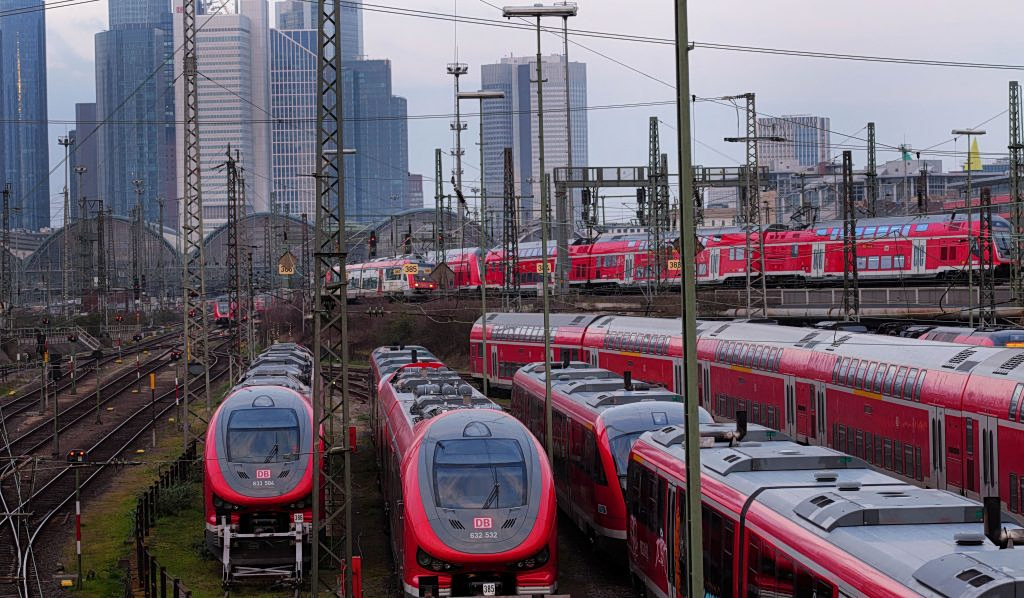
Europe is embarking on a visionary journey to revolutionize its transportation landscape with the "Starline" project, a bold initiative designed to create a continent-spanning high-speed rail network. Recognizing that Europe contributes approximately 25% of global greenhouse gas emissions, with aviation playing a disproportionately large role within the continent's climate impact, this plan offers a compelling alternative. By proposing 22,000 kilometers of high-speed lines connecting nearly 40 cities, Starline aims to shift travelers from carbon-intensive air travel to a significantly greener rail option, which emits up to 90% less CO₂ per journey.
Developed by the think tank "21st Europe," this "mega-metro of European scale" is more than just an infrastructure project; it's a strategic move towards achieving the European Union's ambitious target of net-zero emissions by 2050. The plan integrates with the Trans-European Transport Network, promising speeds of 200 km/h and above, drastically cutting travel times between major hubs. For instance, a journey from Berlin to Copenhagen could be reduced from 7 hours to 4, and Sofia to Athens from 13 hours 40 minutes to just 6 hours. This enhanced connectivity, including new cross-border lines and improved links between Baltic capitals, promises a seamless travel experience across the continent.
From a Greek perspective, the Starline project holds particular significance. The proposed Line E, connecting Milan to Oslo, and Line B, linking Lisbon to Kyiv via Madrid, alongside a Sofia-Athens connection, directly impacts regional travel dynamics. The prospect of reducing the Sofia-Athens journey from over 13 hours to a mere 6 hours is transformative, making rail travel a genuinely competitive option against flights for the first time. This aligns with Europe's long-standing love affair with rail travel, from the golden age of night trains to the enduring appeal of Interrail. However, the current fragmentation and inefficiency of international rail services have long been a barrier. Starline's promise of a unified, efficient, and environmentally conscious network could finally unlock the full potential of European rail, making it the preferred choice for travelers and a cornerstone of the continent's green transition.
DistantNews Editorial
Originally published by Ta Nea in Greek. Translated, summarized, and contextualized by our editorial team with added local perspective. Read our editorial standards.
More Stories


From Our Blog

What Gets Lost (and Found) When News Is Translated

The Critical Role of Diaspora Media in Global News

What Travellers Should Know About Countries with Restricted Press

A Digital Nomad's Guide to Following Local News

How the Same Story Looks Different in Different Countries
