


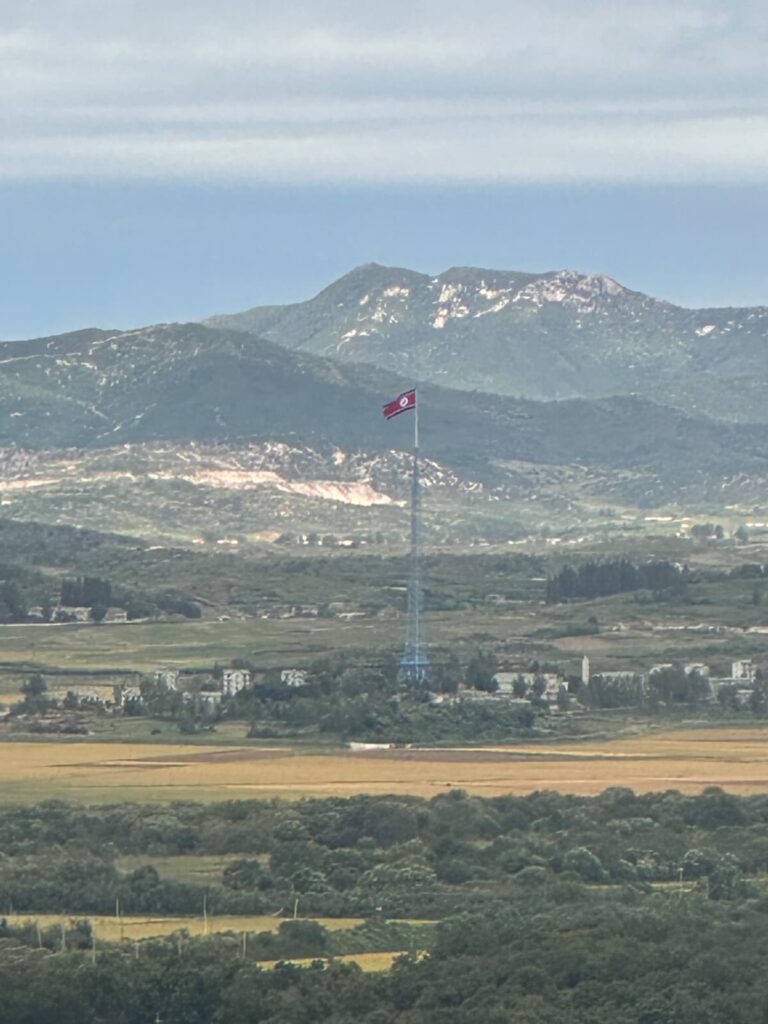
Footprints to the DMZ are Instructive
Translated from Malay, summarized and contextualized by DistantNews.
TLDR
- A visit to the Demilitarized Zone (DMZ) between North and South Korea evokes deep emotion, particularly for those separated from family.
- The DMZ, a 250km buffer zone, has kept Koreans apart for over 70 years since the 1950-53 Korean War armistice.
- Despite its name, the DMZ is heavily militarized, serving as a stark reminder of the ongoing tension and the devastating consequences of war.
Standing at the edge of the Demilitarized Zone (DMZ) is a profoundly moving experience, a place where the scars of war and the pain of separation are palpable. For many, like our tour guide Kenny, the DMZ is a site of deep personal longing, a place where memories of lost family members in North Korea are kept alive, fueling a hope for eventual reunification.
I and my grandfather always come here because he misses his family and relatives in North Korea who have been separated for a long time.
Established after the Korean War armistice in 1953, the DMZ is a stark 250-kilometer-long, 4-kilometer-wide buffer zone that has physically and emotionally divided the Korean peninsula for over seven decades. The armistice may have ended the fighting, but it failed to bring lasting peace, leaving an estimated 10 million South Koreans separated from their families, with no means of communication or contact.
The DMZ, 250 kilometers long and four kilometers wide, is a buffer zone separating South Korea and North Korea after the armistice of the civil war from 1950 to 1953.
For international visitors, the DMZ offers a unique and chilling glimpse into a divided world. The proximity to North Korea, the visible remnants of conflict like landmines and barbed wire, and the heavily guarded posts all serve as a constant reminder of the fragility of the peace. The discovery of North Korean infiltration tunnels, like the third one found in 1978, further underscores the lingering threat and the immense military presence on both sides.
For me as a tourist, the visit to the DMZ was quite exciting. Especially when I could stand just 200 meters from the country led by Kim Jong-un!
However, beyond the military hardware and the historical context, the DMZ is also a place of quiet resilience. Civilians work in fields, and homes dot the landscape, a testament to life persisting even in the shadow of potential conflict. Yet, the underlying tension is undeniable. The DMZ is not truly 'demilitarized'; it remains a heavily fortified border, a symbol of the unresolved conflict that continues to haunt the Korean people and shape their national identity. It is a place that compels reflection on the true cost of war and the enduring hope for reconciliation.
Although it looks calm with civilians working in the fields and many residential houses, my heart was still pounding. This is because the DMZ does not match its name.
DistantNews Editorial
Originally published by Utusan Malaysia in Malay. Translated, summarized, and contextualized by our editorial team with added local perspective. Read our editorial standards.
More Stories


From Our Blog

What Gets Lost (and Found) When News Is Translated

The Critical Role of Diaspora Media in Global News

What Travellers Should Know About Countries with Restricted Press

A Digital Nomad's Guide to Following Local News

How the Same Story Looks Different in Different Countries
