


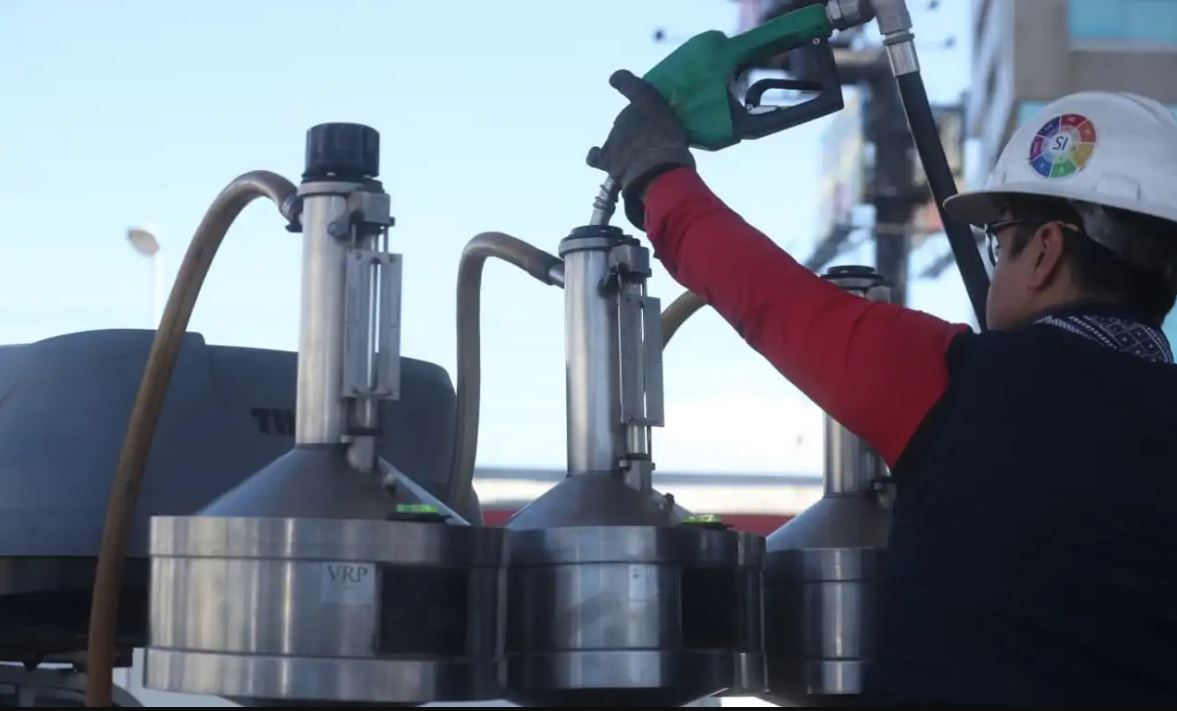
Guatemala allocates Q175.5 million for initial fuel subsidy payment
Translated from Spanish, summarized and contextualized by DistantNews.
TLDR
- Guatemala's Ministry of Energy and Mines (MEM) will disburse Q175.5 million for fuel subsidies.
- The subsidy, effective April 28, provides Q8 per gallon for diesel and Q5 for gasoline for three months, funded by a Q2 billion budget.
- To finance the subsidy, the government has reduced the budgets of the Ministries of Defense, Agriculture, and Communications by a total of Q808 million.
Guatemala is implementing a significant fuel subsidy program aimed at alleviating the financial burden on consumers. The Ministry of Energy and Mines (MEM) is set to disburse Q175.5 million as the first payment to fuel importing companies, marking a crucial step in the execution of this economic measure.
The subsidy, which came into effect on April 28, offers a reduction of Q8 per gallon for diesel and Q5 per gallon for gasoline. This support is slated to last for three months, with a total budget of Q2 billion allocated for the initiative. The process involves the Superintendence of Tax Administration (SAT) providing necessary reports to the MEM, followed by budgetary allocation from the Ministry of Finance to facilitate the payments.
We are going to be enabled with the financial resources because we already have the budgetary ones.
However, the funding for this substantial subsidy comes at a cost. The government has enacted budget cuts totaling Q808 million from several key ministries to finance the program. The Ministry of Defense will see a reduction of Q200 million, the Ministry of Agriculture Q58 million, and the Ministry of Communications, Infrastructure, and Housing Q550 million. These cuts primarily affect physical investment allocations within these ministries.
Despite the government's efforts, some political factions have raised concerns. The Vos party bloc has questioned MEM, SAT, and Diaco officials regarding the subsidy's implementation. A key point of contention is the reference price used for applying the subsidy, with some arguing it should be based on the import invoice price rather than the international market price, which has recently seen increases.
The reference price for the application of the subsidy is the international price of fuels, but we believe it should be the price on the import invoice.
DistantNews Editorial
Originally published by Prensa Libre in Spanish. Translated, summarized, and contextualized by our editorial team with added local perspective. Read our editorial standards.
More Stories

From Our Blog

What Gets Lost (and Found) When News Is Translated

The Critical Role of Diaspora Media in Global News

What Travellers Should Know About Countries with Restricted Press

A Digital Nomad's Guide to Following Local News

How the Same Story Looks Different in Different Countries
