

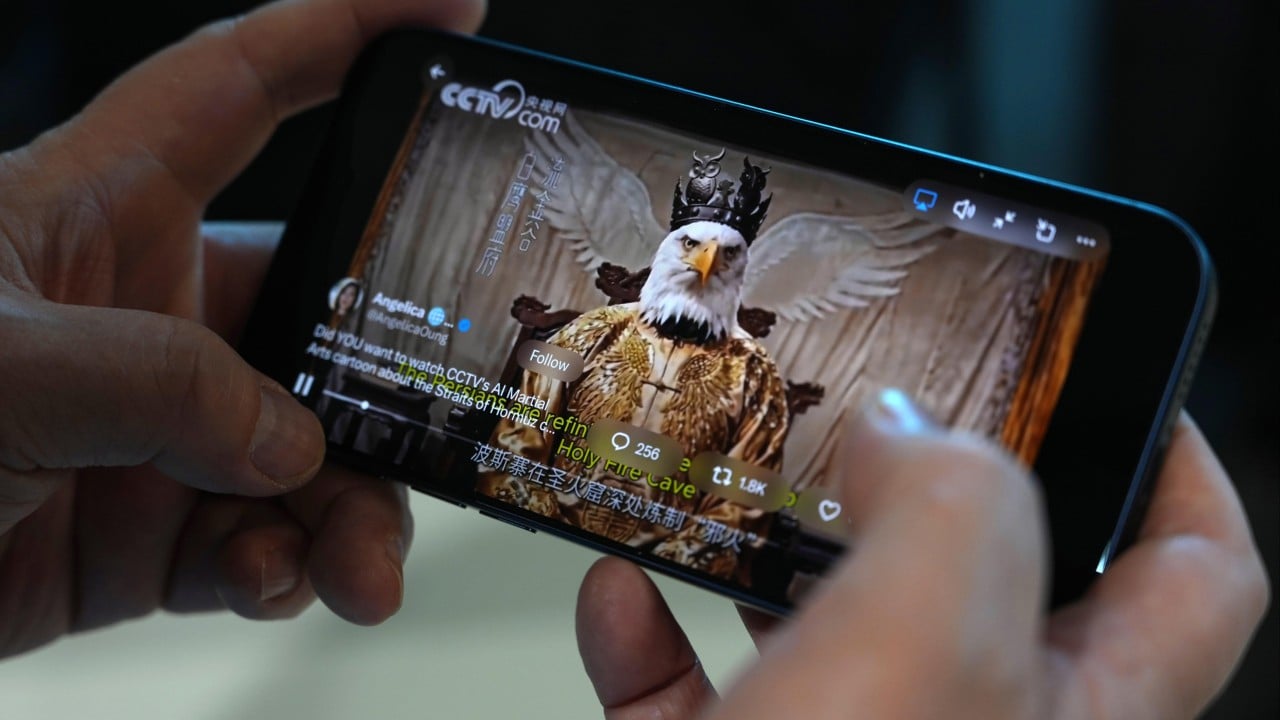

Has China just ended the end of history?
Summarized and contextualized by DistantNews.
TLDR
- Francis Fukuyama, known for his "end of history" thesis, has acknowledged China's authoritarian model as a potentially viable alternative to declining Western democracies.
- Fukuyama praised China's success in marshalling technology and innovation, contrasting it with the perceived fragmentation of American democracy.
- The article also touches upon Sam Harris's controversial views on the Israeli-Palestinian conflict, questioning his stance on equal rights.
This article from the South China Morning Post (SCMP) engages with Francis Fukuyama's evolving views on political systems, particularly his recent acknowledgment of China's authoritarian model. The SCMP frames this shift as a significant commentary on the perceived decline of Western democracies, especially the United States, and the potential rise of China as a viable alternative.
I think that the Chinese have created a pretty impressive system. It is authoritarian. It’s quasi-market-based and they are very successful at marshalling new technology.
The piece highlights Fukuyama's observation that China has developed an "impressive system" that is both authoritarian and quasi-market-based, capable of significant technological innovation. This is juxtaposed with Fukuyama's assessment of democratic America as appearing to be "falling apart." The SCMP uses Fukuyama's apparent change of heart, from "the West is the best" to potentially "the East is red," as a point of reflection on the changing global political landscape.
From the SCMP's perspective, which often navigates the complexities of China's role in the world, this discussion is not necessarily an endorsement of authoritarianism but an observation of its perceived effectiveness in certain areas, particularly technological advancement and state-directed development. The article implicitly questions whether Fukuyama's shift is a genuine re-evaluation or a reflection of current trends, suggesting a degree of skepticism about the intellectual's motivations.
They’re capable of innovating a lot of things we thought they weren’t able to do. And conversely, democracy, especially American democracy, looks like it’s falling apart … if the Chinese keep their development machine going, it may turn out that they have a real alternative.
The inclusion of Sam Harris and his controversial remarks on the Israeli-Palestinian conflict serves to broaden the critique of contemporary public intellectuals. The SCMP uses this to highlight what it sees as a lack of nuanced or principled stances on critical global issues, contrasting Harris's views with the basic expectation of supporting equal rights. The overall tone is one of critical analysis, examining the discourse surrounding political models and the intellectual currents shaping perceptions of global power.
He thinks that it is a myth that the two sides – the Israelis and the Palestinians – in this conflict are “equally civilised, equally entitled to respect, and equally worth protecting”.
DistantNews Editorial
Originally published by South China Morning Post. Summarized and contextualized by our editorial team with added local perspective. Read our editorial standards.
More Stories

From Our Blog

Countries Without a Free Press: What You Need to Know

What Press Freedom Means for the News You Read

What Gets Lost (and Found) When News Is Translated

The Critical Role of Diaspora Media in Global News

What Travellers Should Know About Countries with Restricted Press
