


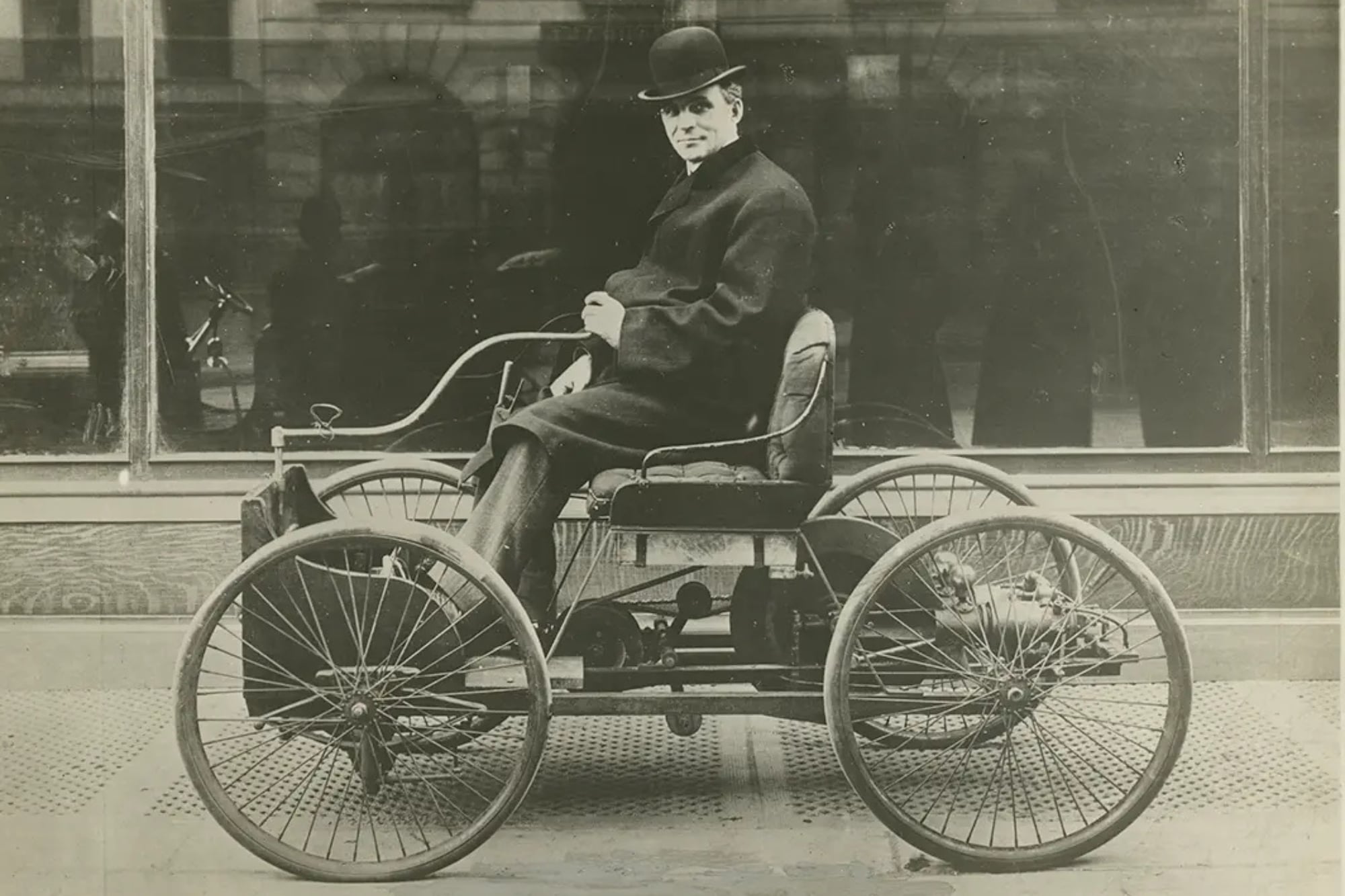
Henry Ford: 'Money and Goods Are Useful Only as They Liberate Us to Live'
Translated from Spanish, summarized and contextualized by DistantNews.
TLDR
- Henry Ford, in his 1922 autobiography, stated that money and possessions are only useful if they enable people to live better lives.
- Ford viewed his company's machines not just as equipment but as proof of his business philosophy, aiming to improve the world.
- He criticized his era's industrial system for fostering waste and underpaying workers, prioritizing service over personal profit.
In his own words, automotive magnate Henry Ford articulated a profound philosophy on wealth and industry in his 1922 autobiography, 'My Life and My Work.' Co-authored with Samuel Crowther, the book reveals Ford's perspective that financial gain and material possessions are merely tools, valuable only to the extent that they facilitate a more meaningful existence. This viewpoint challenges the conventional pursuit of wealth for its own sake, positioning it instead as a means to enhance human life and experience.
El poder y la maquinaria, el dinero y los bienes, solo son útiles en la medida en que nos liberan para vivir
Ford's vision extended beyond mere production; he saw the machinery and output of Ford Motor Company as tangible evidence of a guiding business theory. This theory, he explained, was fundamentally aimed at making the world a better place. This idealistic approach, while perhaps sounding altruistic, was deeply rooted in his practical understanding of industrial efficiency and its potential to uplift society. The success of the Model T, which made automobiles accessible to a broader American public, served as a testament to this philosophy in action.
no son más que medios para un fin
Critically, Ford did not shy away from critiquing the prevailing economic systems of his time. He observed that the industrial model of the era encouraged significant waste and, more importantly, failed to adequately compensate many workers for their contributions. While acknowledging that a purely selfish approach could have yielded him immense personal wealth, Ford maintained that his primary objective was to provide superior service. This emphasis on service over personal enrichment underscores a unique perspective on capitalism, one that sought to balance profit with social responsibility and worker well-being, a concept that continues to resonate in contemporary discussions about corporate ethics.
hacer de este mundo un lugar mejor para vivir
DistantNews Editorial
Originally published by La Nación in Spanish. Translated, summarized, and contextualized by our editorial team with added local perspective. Read our editorial standards.
More Stories



From Our Blog

What Gets Lost (and Found) When News Is Translated

The Critical Role of Diaspora Media in Global News

What Travellers Should Know About Countries with Restricted Press

A Digital Nomad's Guide to Following Local News

How the Same Story Looks Different in Different Countries
