


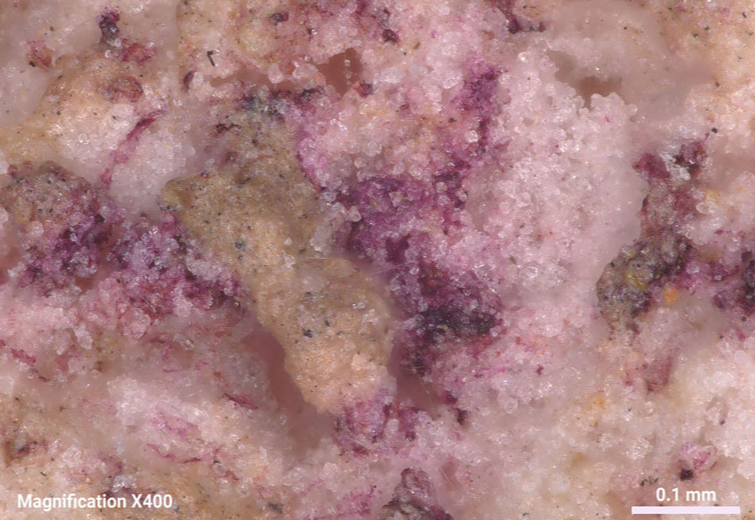
Imperial Purple Dye Found in 1,700-Year-Old Infant Burials in York
Translated from Greek, summarized and contextualized by DistantNews.
TLDR
- Archaeologists in York have discovered rare traces of imperial purple dye in the remains of two infants buried approximately 1,700 years ago.
- The dye, known as Tyrian purple, was a luxurious commodity produced from sea snails and was typically reserved for emperors and the aristocracy.
- This finding is the first evidence of such dye in Roman York, suggesting some inhabitants had access to high-status luxury goods and challenging previous assumptions about Roman mourning practices for infants.
A remarkable discovery in York is shedding new light on the lives of Roman Britain's elite and the poignant rituals surrounding infant mortality. Archaeologists from the University of York have unearthed faint traces of imperial purple dye within the wrappings of two infants buried around 1,700 years ago. This finding is significant not only because it marks the first instance of such dye being detected in Roman York but also because it challenges long-held beliefs about the status of infants and the expression of grief in Roman society.
The dye in question, Tyrian purple, was an emblem of extreme wealth and power in the Roman world. Its production was a complex and costly process, involving the extraction of pigment from thousands of sea snails. Consequently, it was a fabric reserved for the highest echelons of society – emperors, royalty, and the highest aristocracy. Its presence in the burial shrouds of infants suggests that even the youngest members of certain privileged families were afforded the utmost respect and luxury in death, a practice not widely assumed until now.
This discovery, made possible through advanced chemical analysis of gypsum casts used in Roman burial customs, offers a unique window into the social dynamics of Roman York. It demonstrates that luxury goods, previously thought to be exclusive to the very top tier of the empire, were accessible to some residents of this northern provincial city. From a local perspective, this finding is particularly exciting as it elevates the historical narrative of York, revealing a deeper connection to the imperial luxury and social stratification of the Roman world than previously understood. It underscores that even in the distant provinces, the markers of status and the expressions of profound familial love, even in tragedy, were deeply felt and visibly represented.
Η αξιοσημείωτη αυτή ανακάλυψη μας αποκαλύπτει πολλά για τη σημασία των παιδιών στη ρωμαϊκή κοινωνία του York και για την επιθυμία της οικογένειας να προσφέρει στο βρέφος την καλύτερη δυνατή αποχαιρετιστήρια τελετή υπό τραγικές συνθήκες
DistantNews Editorial
Originally published by Ta Nea in Greek. Translated, summarized, and contextualized by our editorial team with added local perspective. Read our editorial standards.
More Stories

From Our Blog

What Gets Lost (and Found) When News Is Translated

The Critical Role of Diaspora Media in Global News

What Travellers Should Know About Countries with Restricted Press

A Digital Nomad's Guide to Following Local News

How the Same Story Looks Different in Different Countries
