


Latvian Security Committee Head Hesitant to Trust Defense Ministry Leadership After Drone Incident
Translated from Latvian, summarized and contextualized by DistantNews.
TLDR
- A Latvian parliamentary committee head expressed difficulty in trusting the political leadership of the Ministry of Defense following a drone incident.
- The incident involved drones entering Latvian airspace from Russia, with at least one crashing in Rēzekne and damaging an oil storage facility.
- While acknowledging the military is doing its best with available resources, the official stressed the need for faster decision-making in defense policy and highlighted issues with personnel turnover and the acquisition of new anti-drone systems.
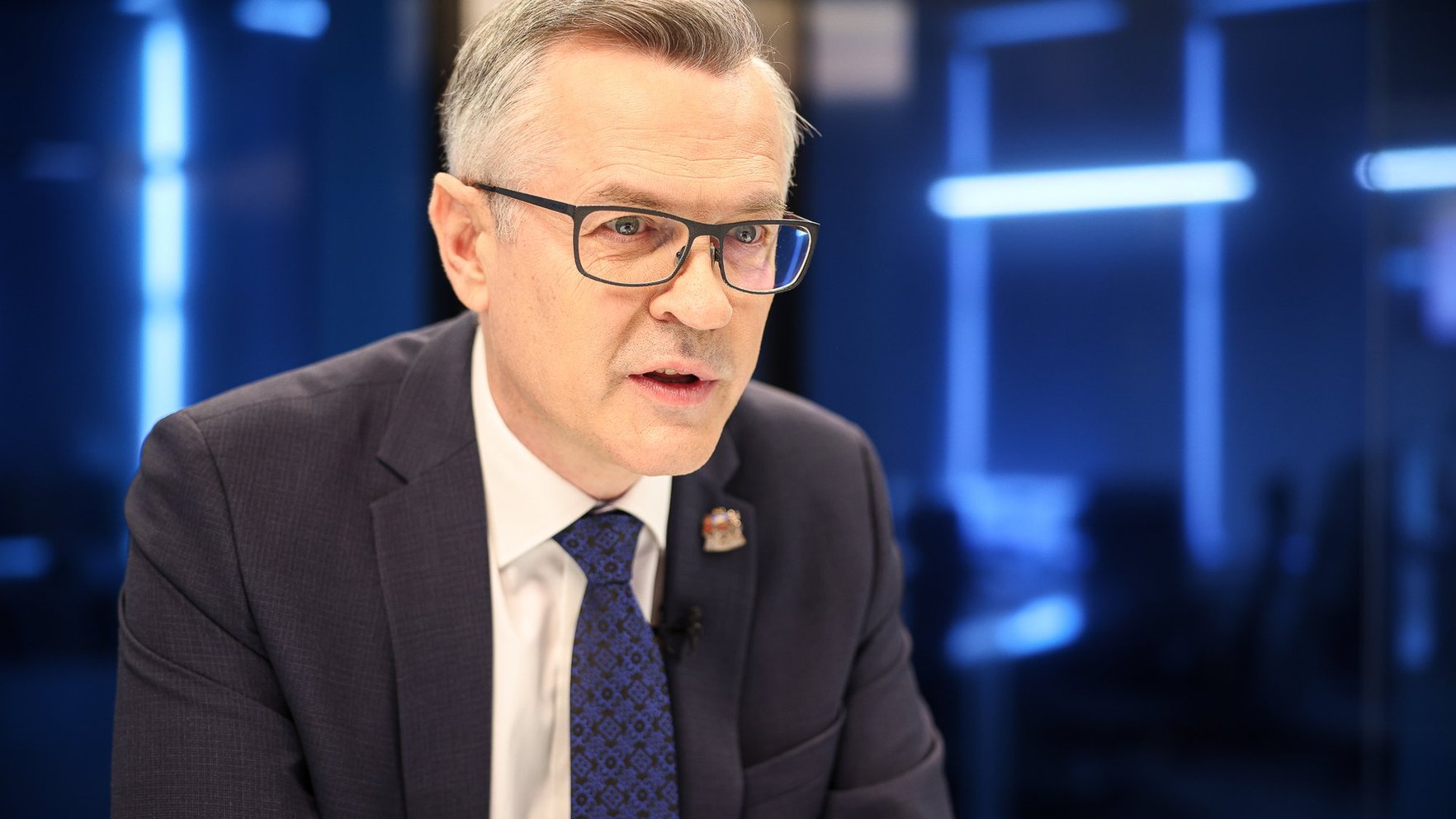
The recent incident where drones entered Latvian airspace from Russia, with one crashing in Rēzekne, has understandably raised concerns within the country. The head of the Saeima's National Security Committee, Latkovskis, voiced his unease, not necessarily with the actions of the National Armed Forces themselves, but with the pace and decisiveness of the political leadership within the Ministry of Defense. This sentiment reflects a broader anxiety in Latvia, a frontline NATO state bordering Russia, about the speed of response and decision-making in critical security matters.
Man ir grūti atbildēt uz šo jautājumu.
Latkovskis's comments highlight a tension between the operational capabilities of the military and the perceived sluggishness of political administration. He pointed to significant personnel changes within the Ministry, suggesting that the departure of experienced specialists could hinder continuity and quality in decision-making. Furthermore, while Latvia is in the process of acquiring anti-drone systems and training personnel, he admitted that current capabilities are largely geared towards ground targets, not drones, and that the development of electromagnetic warfare capabilities is still in its nascent stages. This underscores a vulnerability that is acutely felt in a region constantly assessing threats from its eastern neighbor.
Man ir grūti atbildēt uz šo jautājumu.
The article also touches upon the public communication aspect, noting that it was not sufficiently prompt during the incident. This is a crucial point for a nation that relies on clear and timely information during security crises. The fact that opposition parties are already calling for the defense minister's resignation indicates the political gravity of the situation and the public's expectation for accountability and swift action. From a Latvian perspective, this is not just about a technical failure or a security breach; it's about ensuring the nation's defense apparatus is agile, modern, and led by a political team capable of making rapid, effective decisions in the face of evolving threats.
Latvijā jau ir sākta pretdronu sistēmu iegāde un notiek personāla apmācība, taču šo spēju pilnvērtīgai ieviešanai nepieciešams laiks.
DistantNews Editorial
Originally published by Delfi Latvia in Latvian. Translated, summarized, and contextualized by our editorial team with added local perspective. Read our editorial standards.
More Stories


From Our Blog

What Gets Lost (and Found) When News Is Translated

The Critical Role of Diaspora Media in Global News

What Travellers Should Know About Countries with Restricted Press

A Digital Nomad's Guide to Following Local News

How the Same Story Looks Different in Different Countries
