

Maldives Unveils Ambitious Floating City to Combat Sea Level Rise
Translated from Greek, summarized and contextualized by DistantNews.
TLDR
- The Maldives is developing a floating city project to house 20,000 residents and serve as a model for sustainable urban development.
- Designed by Dutch Docklands in collaboration with the Maldivian government, the city will feature over 5,000 floating homes, canals, and sustainable infrastructure like solar power and local wastewater treatment.
- This ambitious project aims to provide a viable solution to the rising sea levels threatening the low-lying island nation, with initial homes available from approximately 265,000 euros.
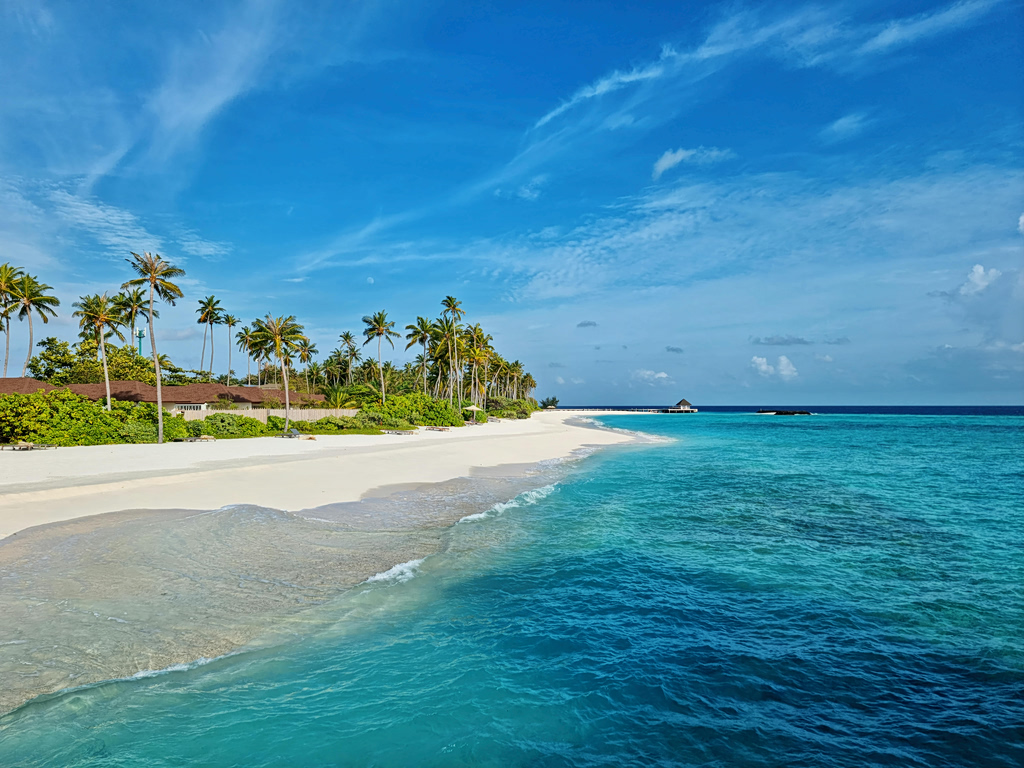
In the face of an existential threat from rising sea levels, the Maldives is pioneering a groundbreaking solution: a floating city. This ambitious project, situated in the turquoise waters near the capital, Malé, is not merely an architectural marvel but a vital strategy for national survival. As one of the world's most vulnerable nations to climate change, with projections of sea level rise threatening to submerge large parts of the country, innovation is not a luxury but a necessity.
The "Maldives Floating City" is designed to accommodate up to 20,000 residents within a 200-hectare area, featuring over 5,000 floating homes, schools, restaurants, and shops. Inspired by the natural form of coral reefs, the city's design incorporates a network of canals, blending functionality with a unique architectural identity. Developed by Dutch Docklands in partnership with the Maldivian government, the project emphasizes sustainability, utilizing solar energy, local wastewater treatment, and innovative deep-sea water cooling systems to minimize environmental impact.
From our perspective here in the Maldives, this project represents more than just urban development; it embodies resilience and a forward-thinking approach to climate adaptation. While international media might focus on the novelty of a "floating city," for us, it is a tangible lifeline. The traditional architecture, with its colorful facades and spacious verandas, is thoughtfully integrated to preserve our cultural identity, ensuring that this city of the future remains rooted in our heritage. The ability for residents to move via boats or sandy paths, using bicycles or electric transport, reflects a lifestyle that respects our environment and community.
This initiative is a testament to our nation's determination to confront the challenges of climate change head-on. The floating homes, anchored to submerged structures and protected by wave-breaking systems that also encourage coral reef growth, are designed to coexist with and even enhance the marine ecosystem. As the first homes become available for around 265,000 euros, with completion targeted for 2027, the Maldives is not just building a city; we are building a future, setting a precedent for coastal nations worldwide grappling with the same environmental pressures.
DistantNews Editorial
Originally published by Ta Nea in Greek. Translated, summarized, and contextualized by our editorial team with added local perspective. Read our editorial standards.
More Stories



From Our Blog

What Gets Lost (and Found) When News Is Translated

The Critical Role of Diaspora Media in Global News

What Travellers Should Know About Countries with Restricted Press

A Digital Nomad's Guide to Following Local News

How the Same Story Looks Different in Different Countries
