


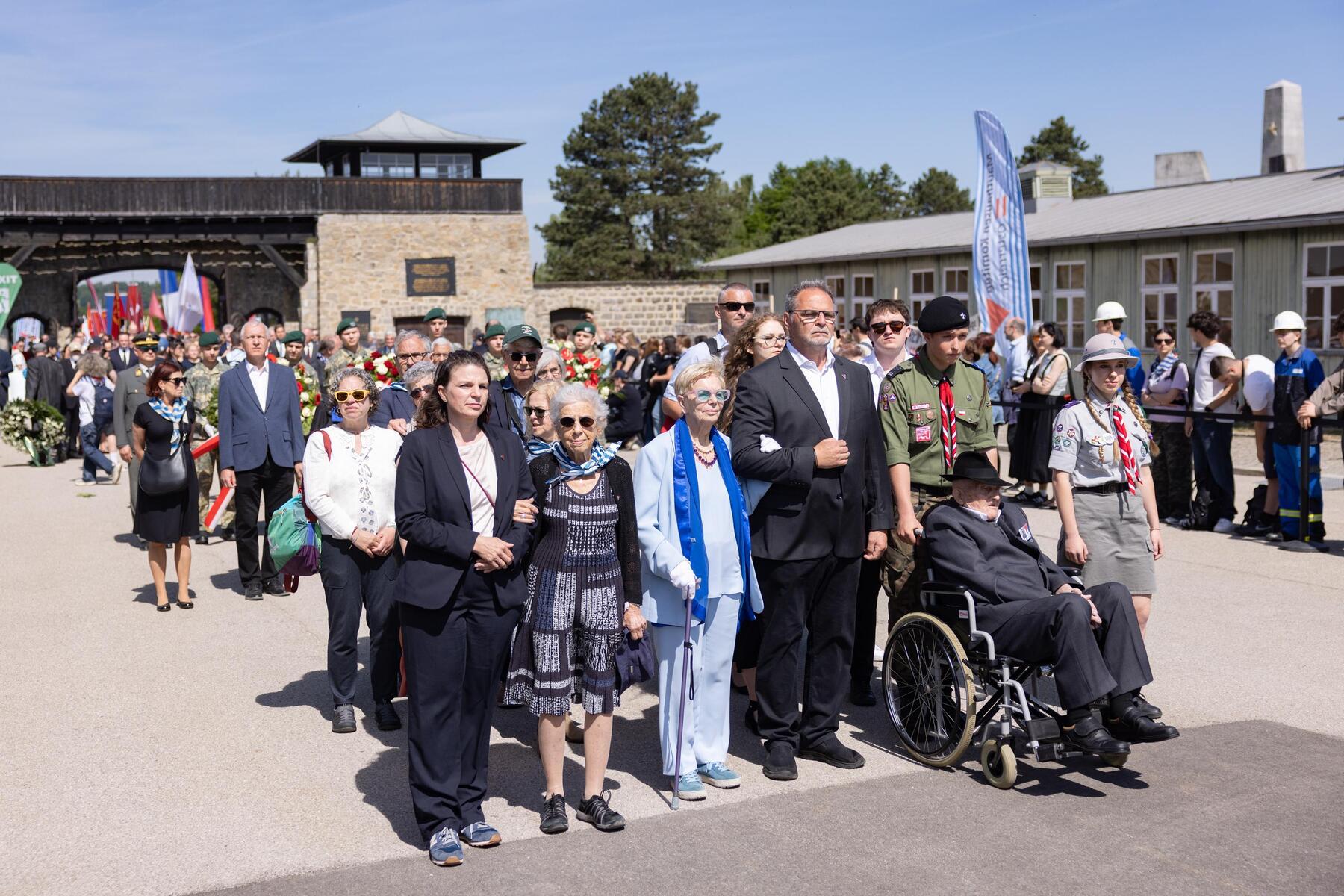
Mauthausen Liberation Commemoration Focuses on Perpetrators and Collaborators
Translated from German, summarized and contextualized by DistantNews.
TLDR
- Around 13,000 visitors attended the 81st anniversary commemoration of the liberation of the Mauthausen concentration camp.
- The commemoration focused on perpetrators and collaborators, highlighting that they came from ordinary society and many were never convicted.
- Speakers warned against complacency and the dangers of racism, extremism, and antisemitism, emphasizing that evil does not appear suddenly but creeps into society.
The 81st anniversary of the liberation of the Mauthausen concentration camp drew a significant international crowd, underscoring the enduring importance of remembering the atrocities of the Nazi era. This year's focus on perpetrators and collaborators served as a stark reminder that such evil does not originate from a vacuum but emerges from ordinary people within society. The Mauthausen Komitee's warning against 'ordinary people' without a sense of injustice, echoing the sentiments of Bishop Scheuer, is a crucial message for contemporary times.
Das große Böse fällt nicht vom Himmel. Es schleicht sich in unsere Herzen, es schleicht sich in unsere Köpfe in Form von Rassismus, Rechtsextremismus, Sexismus, Antisemitismus, in der Abwertung von Menschen, von Armutsbetroffenen und von Geflüchteten.
The emphasis on perpetrators and collaborators, who were often neighbors and colleagues, highlights a critical aspect often overlooked in historical narratives. These individuals, by their actions or inaction, facilitated the 'industry of mass murder.' The fact that a large proportion of them were never convicted after the war is a chilling testament to the complexities of post-war justice and the insidious nature of complicity.
Die Täter „waren Nachbarn, Kolleginnen, Freunde, Menschen wie du und ich. Sie wussten, was sie taten, hier als Lagerpersonal, als Wachpersonal in der gesamten Verwaltung der Mordstätten. Sie denunzierten Angehörige, Kolleginnen und Freunde. Sie hielten die Industrie des Massenmords am Laufen.“
From an Austrian perspective, these commemorations are not merely historical exercises but vital acts of remembrance and civic education. They serve to confront the nation's past, acknowledge the responsibility of perpetrators, and educate future generations about the dangers of extremism and dehumanization. The presence of official Austrian representatives alongside international delegations and survivors reinforces Austria's commitment to keeping the memory of Mauthausen alive and to actively combating any resurgence of ideologies that led to such horrors.
gewöhnlichen Menschen“ ohne Unrechtsbewusstsein.
This event is particularly significant for Austria, as it grapples with its role during the Nazi era. While international coverage often focuses on the sheer scale of the Holocaust, the Mauthausen commemorations, especially this year's focus, delve into the human element of perpetration and complicity. This local perspective is essential for understanding how such events can unfold and for fostering a vigilant society that actively resists the 'creeping' of evil into hearts and minds.
Monster gebe es, aber gefährlicher seien „gewöhnliche Menschen, Funktionäre, die bereit sind, zu glauben und zu handeln, ohne Fragen zu stellen“
DistantNews Editorial
Originally published by Die Presse in German. Translated, summarized, and contextualized by our editorial team with added local perspective. Read our editorial standards.
More Stories



From Our Blog

What Gets Lost (and Found) When News Is Translated

The Critical Role of Diaspora Media in Global News

What Travellers Should Know About Countries with Restricted Press

A Digital Nomad's Guide to Following Local News

How the Same Story Looks Different in Different Countries
