


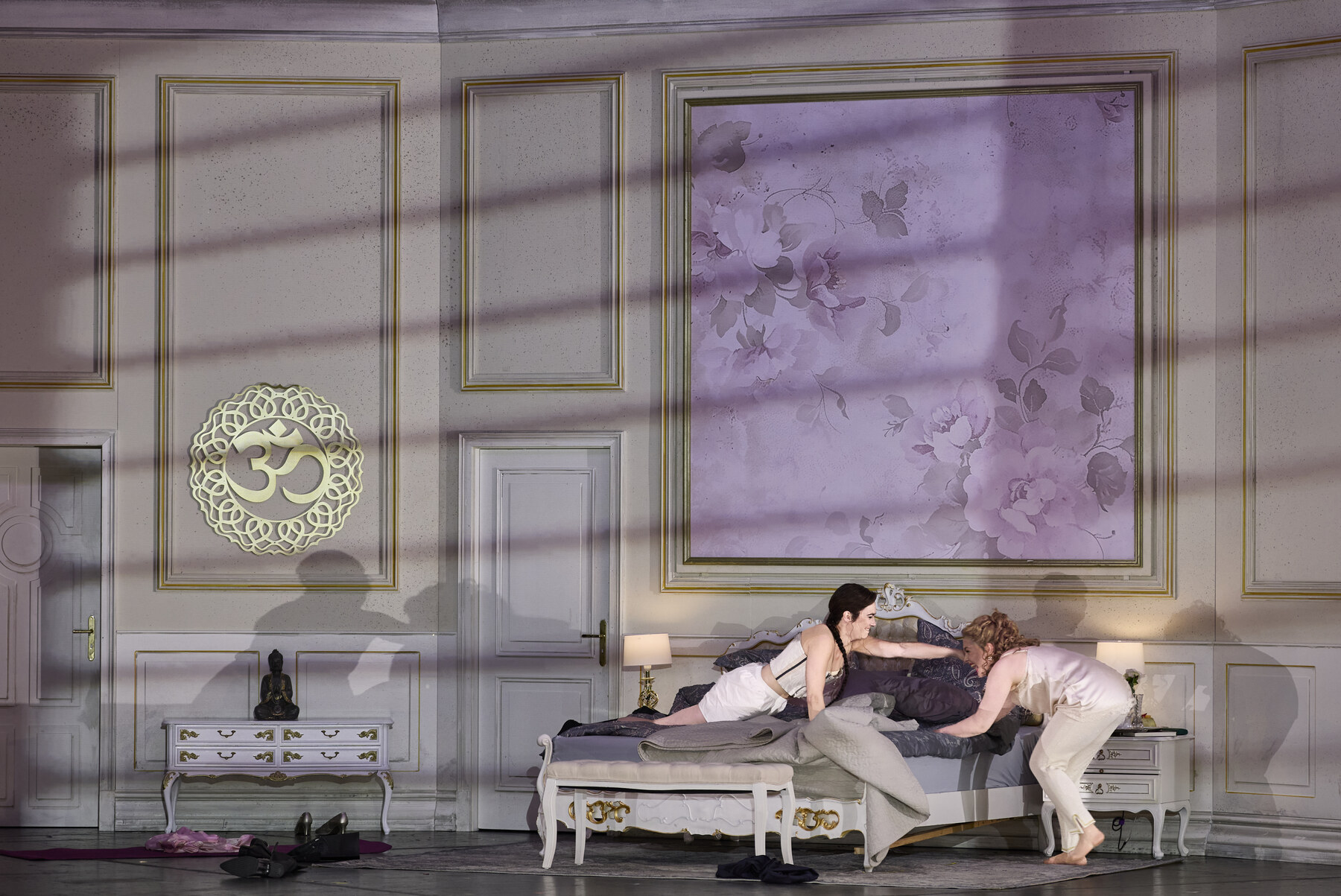
“Rosenkavalier” in Graz: Where Women Strike and Stab
Translated from German, summarized and contextualized by DistantNews.
TLDR
- The Graz production of Richard Strauss's opera "Der Rosenkavalier" offers a unique interpretation, emphasizing interpersonal dynamics through innovative staging.
- Director Philipp Krenn and set designer Momme Hinrichs utilize a revolving stage to fluidly transition between various settings, from the Marschallin's foyer to the kitchen.
- The production features distinct visual styles, blending early 20th-century aesthetics with 1970s elements and contemporary touches, while Wilfried Zelinka delivers a memorable performance as the boorish Baron Ochs.
The Graz Opera's new production of Richard Strauss's "Der Rosenkavalier" presents a compelling and dynamic interpretation, masterfully directed by Philipp Krenn with scenography by Momme Hinrichs. The staging is particularly noteworthy for its inventive use of a revolving stage, which allows for seamless transitions between the opera's diverse locales. This fluidity enhances the exploration of the intricate interpersonal relationships that lie at the heart of Strauss and Hofmannsthal's work.
Krenn's direction skillfully integrates various time periods into the visual landscape. The set and costumes, designed by Hinrichs and Eva Maria Dessecker respectively, juxtapose the societal norms of early 20th-century aristocratic circles and student fraternities with the distinct aesthetics of the 1970s, incorporating elements like bubble chairs and bold floral wallpaper. This eclectic mix creates a rich tapestry that complements the opera's themes, grounding the narrative while allowing for modern resonance. The portrayal of Baron Ochs by Wilfried Zelinka is a standout, capturing the character's vulgarity and self-importance with a distinctly "Austro-prolet" flair.
A particularly striking directorial choice is the integration of the Marschallin's past into the narrative, visualized through a flashback of her own wedding. This allows for a poignant juxtaposition of the Marschallin's younger self with Sophie, emphasizing themes of fate and self-determination. The production culminates in Sophie taking a decisive action against Ochs, a moment that highlights Krenn's nuanced approach to the characters' agency. The superb orchestral performance under Vassilis Christopoulos, particularly the brass section, further elevates this acclaimed production, which was met with enthusiastic applause.
DistantNews Editorial
Originally published by Die Presse in German. Translated, summarized, and contextualized by our editorial team with added local perspective. Read our editorial standards.
More Stories


From Our Blog

What Gets Lost (and Found) When News Is Translated

The Critical Role of Diaspora Media in Global News

What Travellers Should Know About Countries with Restricted Press

A Digital Nomad's Guide to Following Local News

How the Same Story Looks Different in Different Countries
