


Minister Apologizes for Controversy Over Proposal for Women's Carriages
Translated from Indonesian, summarized and contextualized by DistantNews.
TLDR
- Indonesia's Minister for Women's Empowerment and Child Protection apologized for her controversial suggestion regarding train carriage placement.
- The minister proposed moving women's carriages to the middle and men's to the ends after a train accident where most victims were women.
- The ministry is providing psychological support to victims and their families following the accident.
Indonesia's Minister for Women's Empowerment and Child Protection, Arifatul Choiri Fauzi, has issued a public apology following a significant backlash over her suggestion to reconfigure train carriages. The proposal, made in the wake of a tragic accident involving the Argo Bromo Anggrek train and a KRL, involved moving designated women's carriages to the middle of the train and placing men's carriages at the front and rear. This suggestion, intended to address the disproportionate number of female victims in the accident, was widely criticized online.
I realize that the statement was inappropriate, for that I apologize profusely to all the public, especially to the victims and families who feel hurt or uncomfortable.
Tempo.co reports that the minister acknowledged her statement was "inappropriate" and "hurtful" to victims and their families. She clarified that her intention was not to disregard the safety of male passengers but to prioritize the safety of all individuals. The ministry is actively engaged in supporting the victims and children affected by the accident, offering psychological assistance to those experiencing trauma. This aligns with the President's directive for swift, fair, and comprehensive handling of the aftermath.
I understand that in situations like this, the main focus is also on the safety of victim handling and empathy for the affected families.
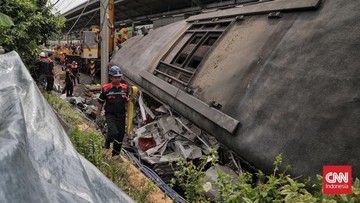
The accident itself, which occurred on April 27, 2026, involved a collision between the Argo Bromo Anggrek train and a KRL commuter line near Bekasi Timur station. The KRL had stopped due to an earlier incident involving a taxi. The collision resulted in the severe damage of the women's carriage, leading to 16 fatalities, all of whom were women. The minister's proposal was made during a visit to victims being treated at the Bekasi Regional General Hospital.
So, the front and back [carriages] are for men, while women are in the middle.
From an Indonesian perspective, the incident and the subsequent public discourse highlight a sensitive societal issue regarding gender-based safety and public transportation. While the minister's intention might have been to enhance safety for women, the public reaction underscores a broader concern that such measures could be seen as discriminatory or as failing to address the root causes of accidents. The focus on providing support to victims and improving public transport safety systems reflects a national priority, as emphasized by the President's directives.
According to the President's directive, all handling processes are carried out quickly, fairly, and comprehensively.
DistantNews Editorial
Originally published by Tempo in Indonesian. Translated, summarized, and contextualized by our editorial team with added local perspective. Read our editorial standards.
More Stories


From Our Blog

What Gets Lost (and Found) When News Is Translated

The Critical Role of Diaspora Media in Global News

What Travellers Should Know About Countries with Restricted Press

A Digital Nomad's Guide to Following Local News

How the Same Story Looks Different in Different Countries
