


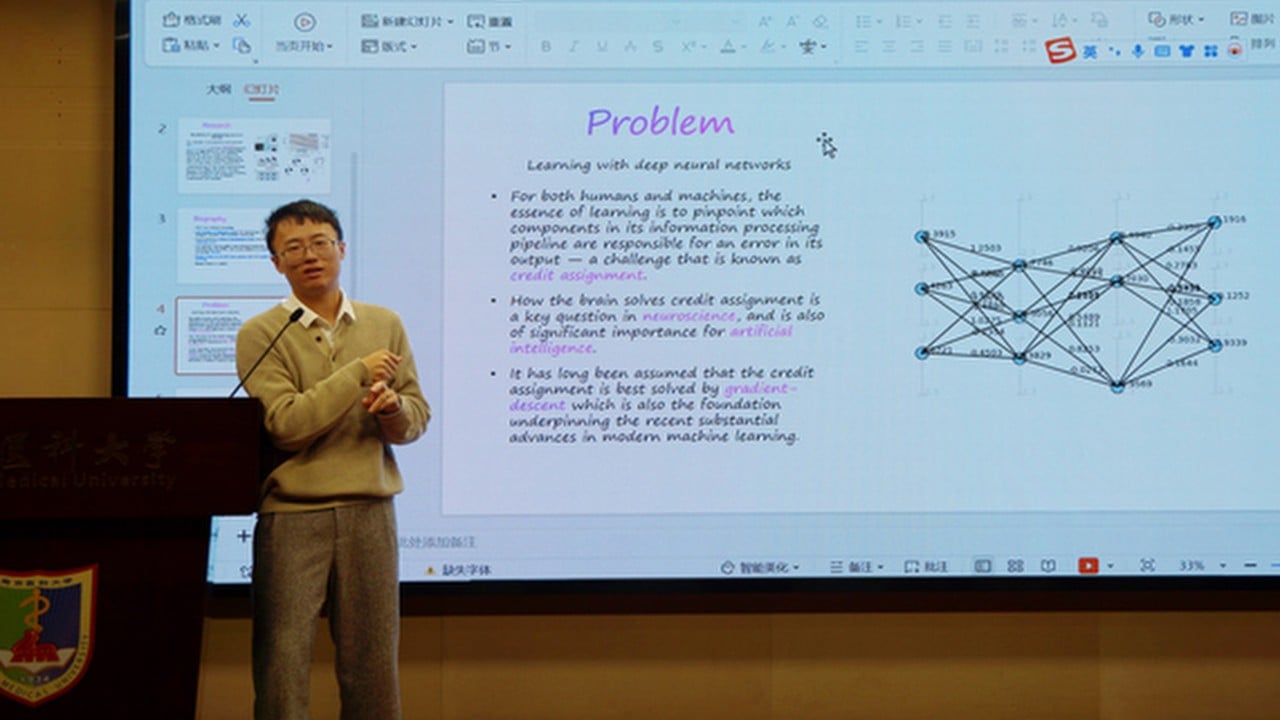
Oxford AI star Song Yuhang returns to China, joins Nanjing University
Translated from English, summarized and contextualized by DistantNews.
TLDR
- Song Yuhang, a prominent figure in the UK's AI chip field, has returned to China to become an associate professor at Nanjing University.
- Song co-founded the UK start-up Fractile in 2021 with the goal of manufacturing AI chips faster than Nvidia's.
- His departure from Fractile in May 2024 followed reports questioning his academic background and past ties to Chinese institutions, though no misconduct is suggested.
Nanjing University has welcomed Song Yuhang, a distinguished young scientist who was a leading figure in Britain's AI chip sector, as an associate professor. Song's return to China marks a significant development, bringing his expertise in artificial intelligence to a prominent Chinese academic institution.
Song, who earned his PhD from the University of Oxford in 2022 and received the prestigious JP Morgan AI Research Award, co-founded Fractile in 2021. The UK-based start-up aimed to capitalize on the burgeoning demand for computing power by developing AI chips designed to outperform industry leader Nvidia.
However, Song's departure from Fractile in May 2024 has been a subject of media attention. Reports have raised questions regarding his academic background and earlier affiliations with Chinese institutions. While these suggestions have been noted, it is important to emphasize that the source material explicitly states there is no suggestion of misconduct or intellectual property transfer involving Song.
From a Chinese perspective, Song's return is a notable gain for its burgeoning AI research and development landscape. His academic achievements and entrepreneurial experience in the UK are valuable assets that will contribute to Nanjing University's standing and China's broader ambitions in the global AI race. The narrative surrounding his departure, while noted, does not detract from the significance of his academic contributions and his new role in China.
DistantNews Editorial
Originally published by South China Morning Post in English. Translated, summarized, and contextualized by our editorial team with added local perspective. Read our editorial standards.
More Stories



From Our Blog

Countries Without a Free Press: What You Need to Know

What Press Freedom Means for the News You Read

What Gets Lost (and Found) When News Is Translated

The Critical Role of Diaspora Media in Global News

What Travellers Should Know About Countries with Restricted Press
