


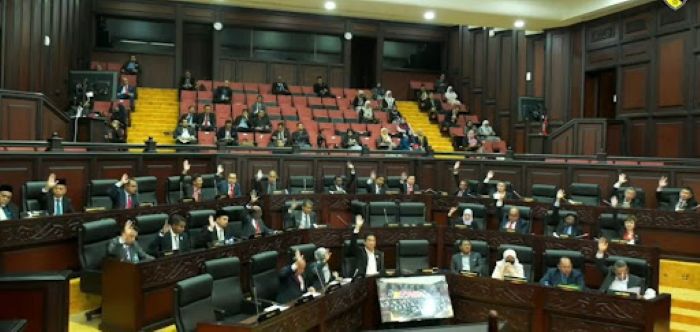
Political Crisis Exposes Flaws in Electoral System
Translated from Malay, summarized and contextualized by DistantNews.
TLDR
- A political crisis in Negeri Sembilan highlights the incompatibility of Malaysia's outdated electoral system with its current political landscape.
- The crisis stems from voters feeling betrayed by coalition partners switching allegiances, exemplified by UMNO leaving the Pakatan Harapan coalition.
- Proposed reforms include adding a Closed List Proportional Representation (CLPR) system to the existing First-Past-The-Post (FPTP) seats to give voters two votes and encourage broader party accountability.
The recent political turmoil in Negeri Sembilan has starkly exposed the deep-seated flaws within Malaysia's electoral architecture. The current system, a relic of a bygone era, is demonstrably ill-equipped to handle the fluid and often volatile nature of contemporary Malaysian politics. When coalition partners abruptly sever ties, as seen with UMNO's departure from the Pakatan Harapan alliance, voters are left feeling disenfranchised and betrayed, questioning the very foundation of their electoral choices.
This crisis underscores a critical need for institutional reform. The proposal to introduce a Closed List Proportional Representation (CLPR) system alongside the existing First-Past-The-Post (FPTP) seats offers a potential solution. By granting voters two distinct votes—one for a local candidate and another for a party at the state level—this dual-vote system could significantly alter electoral dynamics. It would compel parties to court not only their core supporters but also the followers of their coalition partners, thereby fostering greater inter-party cooperation and reducing the incentive for post-election defections.
Implementing such reforms, particularly amending Articles 116 and 117 of the Federal Constitution to enable CLPR, presents a formidable challenge. However, the urgency cannot be overstated. While concerns about potential deepening of political polarization are valid, they must be addressed through robust public discourse, not by outright rejection of innovative ideas. The current system, which allows for such dramatic shifts in alliances and leaves voters feeling adrift, is arguably more damaging to the nation's political stability and public trust.
From a Malaysian perspective, this debate is not merely academic; it strikes at the heart of democratic representation and political accountability. The current system, which often rewards opportunistic maneuvering over genuine public service, needs a fundamental overhaul. The proposed CLPR system, while requiring careful consideration and public debate, offers a path towards a more representative and stable political future, where the will of the people is more accurately reflected and where political actors are held more accountable for their commitments.
DistantNews Editorial
Originally published by Utusan Malaysia in Malay. Translated, summarized, and contextualized by our editorial team with added local perspective. Read our editorial standards.
More Stories



From Our Blog

What Gets Lost (and Found) When News Is Translated

The Critical Role of Diaspora Media in Global News

What Travellers Should Know About Countries with Restricted Press

A Digital Nomad's Guide to Following Local News

How the Same Story Looks Different in Different Countries
