


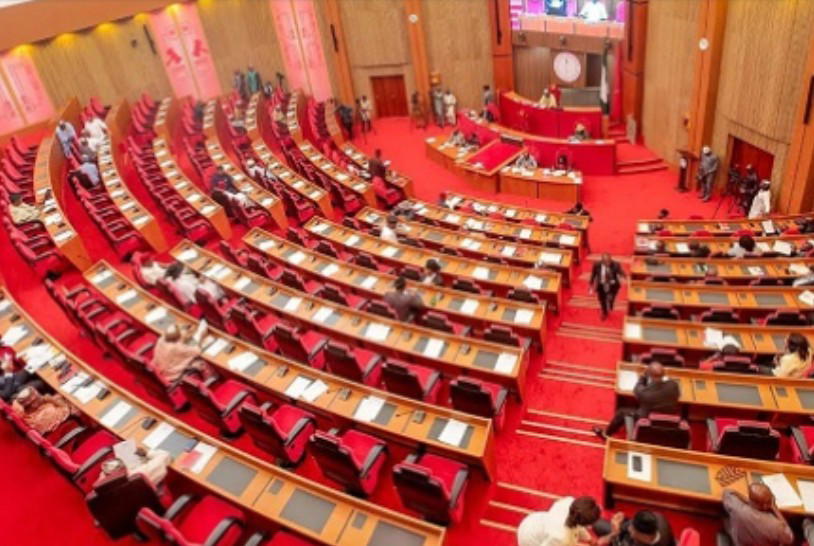
Senate Leader Defends Consensus Primaries, Citing Safeguards Against Imposition
Translated from English, summarized and contextualized by DistantNews.
TLDR
- Senate Majority Leader Michael Opeyemi Bamidele defended Nigeria's electoral law's consensus provision, stating it prevents candidate imposition.
- Bamidele clarified that even with consensus, a full primary process is still required, with an open endorsement at the ward level.
- He argued that the removal of indirect primaries safeguards against elite capture and ensures broader participation in decision-making.
Senate Majority Leader Michael Opeyemi Bamidele has firmly defended the consensus option within Nigeria's electoral law, asserting that it serves as a crucial safeguard against the imposition of candidates and ensures a degree of democratic participation. Speaking on the sidelines of the All Progressives Congress (APC) 2026 governorship primaries, Bamidele emphasized that the consensus provision is designed to prevent backroom deals and that a single objection can trigger direct primaries. This clarification is vital in a political landscape often scrutinized for its internal party processes.
“I could also see that virtually all the members of the National Working Committee of the party are here other than the chairman and the national secretary. It means that they are according a lot of importance to this process and it’s just the way to go. I just think it’s the right thing to do”
Bamidele elaborated on the mechanics of the consensus arrangement, explaining that even when a candidate receives unanimous endorsement, the primary election process cannot be entirely circumvented. He highlighted that an open endorsement at the ward level is still a mandatory step, ensuring that the process remains transparent and inclusive. This stance directly addresses concerns that consensus might be used as a tool for undemocratic power consolidation. The senator’s defense underscores a legislative intent to balance efficiency with democratic principles, ensuring that party members have a voice, even in consensus-driven selections.
“In any case there will always be primaries. Even where you have only one aspirant, there will still be primaries because for someone who has been endorsed by consensus, everybody will still go to the ward, everybody will still participate in the primaries because there will still be the need to do an endorsement — open endorsement at the ward level. So there’s nothing that can be done under the table whether you are doing direct primaries or you are doing consensus”
The rationale behind removing the indirect primaries model, Bamidele explained, was to prevent elite capture of the electoral process. By moving away from a system where a limited pool of delegates made decisions, the legislature aimed to empower the broader party membership. While acknowledging that consensus arrangements in local politics, particularly in Ekiti, have sometimes been controversial, Bamidele drew upon his own candidacy as an example of a successful, non-coercive consensus. He noted that stakeholders in his central district expressed satisfaction with his representation and chose not to field a challenger, a decision he attributes to genuine satisfaction rather than coercion. This personal anecdote serves to illustrate the potential of the consensus model when implemented fairly, though he concedes that such unanimity may not be replicated across all districts statewide.
“We didn’t think a few people in the name of delegates should take decisions on behalf of the people”
DistantNews Editorial
Originally published by Vanguard in English. Translated, summarized, and contextualized by our editorial team with added local perspective. Read our editorial standards.
More Stories


From Our Blog

How the Same Story Looks Different in Different Countries

What Gets Lost (and Found) When News Is Translated

The Critical Role of Diaspora Media in Global News

What Travellers Should Know About Countries with Restricted Press

A Digital Nomad's Guide to Following Local News
