


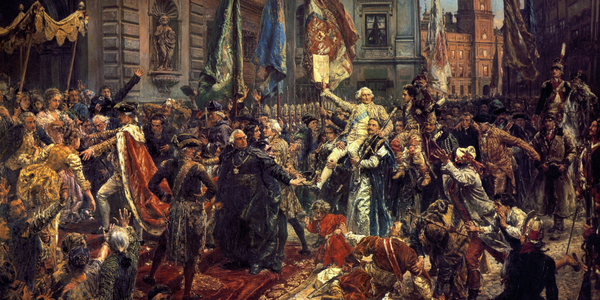
Speaking in the Voice of an Anonymous Deputy of the Great Sejm, in the Language of His Era
Translated from Polish, summarized and contextualized by DistantNews.
TLDR
- The article discusses the historical debate surrounding the Polish Constitution of May 3, 1791, and its consequences.
- It notes that many historians avoid critical assessment of the constitution's negative outcomes.
- The piece explores how anonymous members of the Sejm Wielki (Great Sejm) might have viewed their actions from a modern perspective, using historical pastiche.
The Rzeczpospolita delves into the complex legacy of the Constitution of May 3, 1791, a landmark document in Polish history. The article points out a curious trend among many historians: a reluctance to critically examine the constitution's less fortunate consequences. This tendency to 'gently bypass' negative assessments, as the article suggests, leaves a significant gap in our understanding of this pivotal moment.
Instead of offering a direct historical analysis, the publication opts for a unique approach: a historical pastiche. It attempts to channel the voice of an anonymous deputy from the Sejm Wielki, imagining how such an individual, from the perspective of 235 years later, might reflect on the effort and implications of enacting the "Law on Government" in 1791. This method, while avoiding direct historical interpretation, seeks to evoke the spirit and potential contemporary reflections of the era's figures.
This approach is particularly relevant from a Polish perspective. The Constitution of May 3rd is often celebrated as a moment of national revival and progressive reform. However, acknowledging its full historical context, including any perceived shortcomings or unintended consequences, is crucial for a complete understanding. Rzeczpospolita's exploration, by adopting this unique narrative voice, prompts readers to consider the multifaceted nature of historical events and the enduring debates they inspire. It highlights how historical narratives can be shaped by what is emphasized and what is subtly omitted, inviting a deeper engagement with Poland's past.
DistantNews Editorial
Originally published by Rzeczpospolita in Polish. Translated, summarized, and contextualized by our editorial team with added local perspective. Read our editorial standards.
More Stories



From Our Blog

What Gets Lost (and Found) When News Is Translated

The Critical Role of Diaspora Media in Global News

What Travellers Should Know About Countries with Restricted Press

A Digital Nomad's Guide to Following Local News

How the Same Story Looks Different in Different Countries
