

Supreme Court's Professional Responsibility Chamber Paralyzed by Leadership Vacuum
Translated from Polish, summarized and contextualized by DistantNews.
TLDR
- The Supreme Court's Chamber for Professional Responsibility in Poland has been without a president since December, hindering its ability to function.
- President Andrzej Duda has not yet appointed a successor despite candidates being nominated months ago, leading to frustration among judges.
- The lack of a president and several judges impairs the chamber's unique competencies, including its role in the Supreme Court's collegium and its ability to convene judges' assemblies.
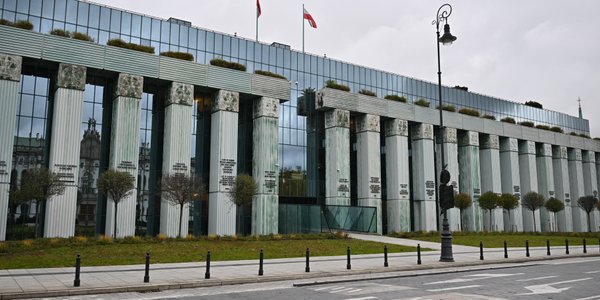
The Supreme Court's Chamber for Professional Responsibility is facing a critical leadership vacuum, with the absence of a president since December paralyzing its essential functions. This paralysis stems from President Andrzej Duda's prolonged delay in appointing a successor, despite the chamber's judges having nominated candidates months ago. This inaction, which has drawn criticism from First President of the Supreme Court Małgorzata Manowska, not only leaves the chamber short-staffed but also prevents it from exercising unique competencies crucial for its operation.
The president of the chamber has a number of unique competencies that a judge designated to replace them does not possess. First and foremost, they are an ex officio member of the Supreme Court's collegium, which has very important functions described by the Act on the Supreme Court – also for the proper functioning of the chamber – and a judge designated to perform the duties of the president cannot sit on the collegium solely on this basis.
Judges within the chamber express frustration over the situation, highlighting that a designated acting president cannot replicate the full authority of a permanent appointee. Specifically, the acting president cannot serve as an ex-officio member of the Supreme Court's collegium, nor can they convene the chamber's assembly of judges. These limitations impede the chamber's ability to make legally mandated decisions and handle personnel matters, creating unnecessary tension and hindering efficient operation. The situation is exacerbated by the ongoing shortage of three judges within the chamber, for whom candidacies also await presidential decision.
They also cannot convene the chamber's assembly of judges, which means the self-governing body cannot make decisions provided for by law.
This political deadlock at the heart of Poland's judiciary raises serious concerns about the rule of law and the effective functioning of its highest courts. The delay in appointments, particularly for a chamber responsible for disciplinary and immunity cases involving judges and prosecutors, suggests a politicization of judicial appointments that undermines public trust. The lack of transparency from the President's Chancellery, which has refused to provide reasons for the delay, further fuels speculation and concern among legal professionals and the public alike.
There are also a number of prosaic personnel decisions that require the president's resolution, and their absence seriously hinders the normal functioning of the chamber, resulting in completely unnecessary tensions.
DistantNews Editorial
Originally published by Rzeczpospolita in Polish. Translated, summarized, and contextualized by our editorial team with added local perspective. Read our editorial standards.
More Stories
From Our Blog

What Gets Lost (and Found) When News Is Translated

The Critical Role of Diaspora Media in Global News

What Travellers Should Know About Countries with Restricted Press

A Digital Nomad's Guide to Following Local News

How the Same Story Looks Different in Different Countries
