

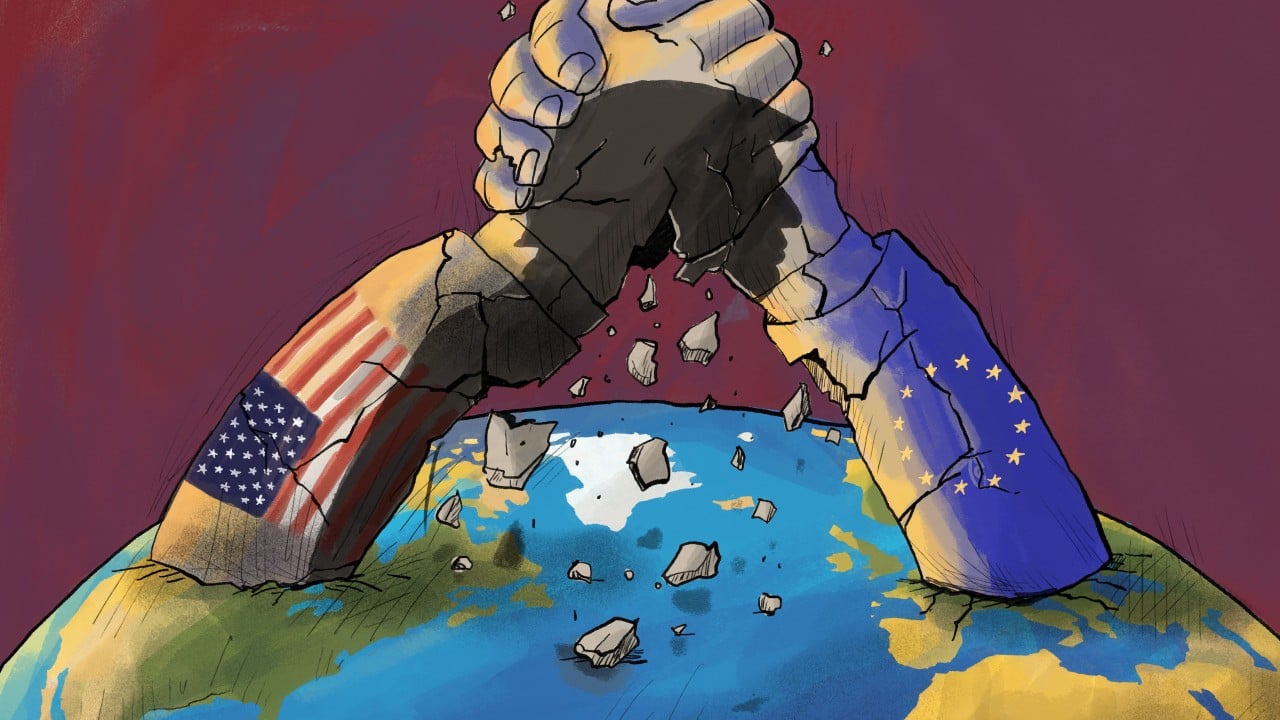
The rupture: how Europe fell out of love with America
Summarized and contextualized by DistantNews.
TLDR
- Europe's initial enthusiasm for a renewed transatlantic alliance, following Donald Trump's presidency, has waned.
- The invasion of Ukraine initially strengthened cooperation between the US and Europe, particularly within the G7 framework.
- Hopes that the alliance could withstand another Trump term have diminished, with questions arising about the depth and permanence of the rupture in relations.
The initial optimism that swept through Europe following President Joe Biden's declaration of "America is back at the table" in 2021 appears to have significantly faded. After the tumultuous years of Donald Trump's presidency, which left transatlantic relations in tatters, the invasion of Ukraine provided a much-needed impetus for renewed cooperation. The G7 summit in Cornwall became a focal point for coordinating sanctions against Russia and aligning Western policy towards China.
This period saw a resurgence of NATO's relevance, a stark contrast to French President Emmanuel Macron's earlier pronouncement of the alliance being "brain dead." Biden's return to the White House and Russia's aggression seemed to have revitalized the Western alliance. Many in Brussels harbored hopes that even a second Trump term could be weathered, given the strengthened bonds forged in the interim.
However, the landscape has shifted dramatically. The initial euphoria has given way to a more somber assessment, with many now acknowledging a significant "rupture" in the transatlantic relationship. The extent and longevity of this divergence remain subjects of debate, but the once-unshakeable belief in a unified Western front appears to be a relic of the recent past. This shift raises critical questions about the future of global alliances and the reliability of international partnerships.
America is back at the table
DistantNews Editorial
Originally published by South China Morning Post. Summarized and contextualized by our editorial team with added local perspective. Read our editorial standards.
More Stories

From Our Blog

Countries Without a Free Press: What You Need to Know

What Press Freedom Means for the News You Read

What Gets Lost (and Found) When News Is Translated

The Critical Role of Diaspora Media in Global News

What Travellers Should Know About Countries with Restricted Press
