

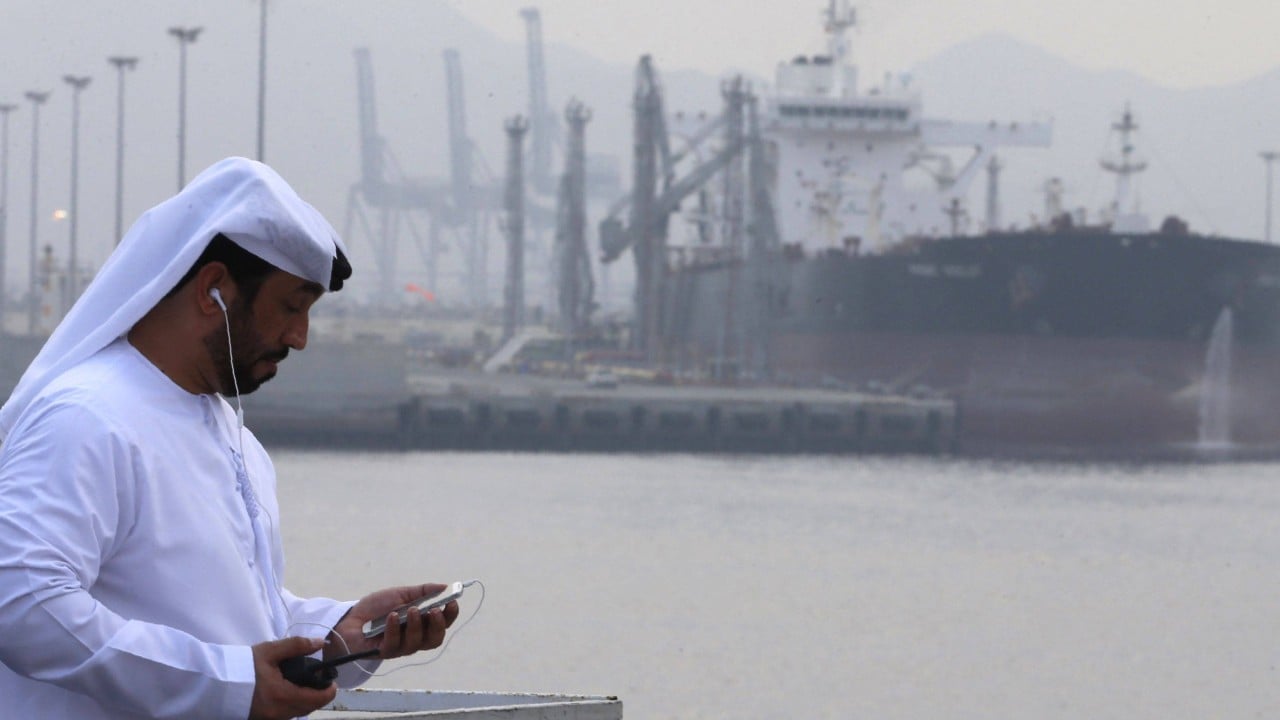
The UAE’s exit from Opec could bring ‘even bigger trouble’: Chinese expert
Summarized and contextualized by DistantNews.
TLDR
- The UAE's departure from OPEC is seen as a sign of growing divisions within the Gulf Cooperation Council (GCC).
- The UAE cited national interests and commitment to global market demand as reasons for its exit.
- This follows similar withdrawals by Qatar, Ecuador, and Angola in recent years, indicating a potential shift in oil market dynamics.
The United Arab Emirates' decision to withdraw from OPEC, a move confirmed by its Ministry of Infrastructure, sends ripples far beyond the energy sector, signaling a potential fracturing within the Gulf Cooperation Council (GCC) itself. While the UAE officially states its decision is rooted in 'national interests' and a commitment to meeting 'global market demand,' analysts, like Sun Degang from Fudan University, interpret this as a symptom of deeper cohesion problems within the GCC.
This departure is not an isolated event. It follows a pattern set by other member states: Qatar in 2019, Ecuador a year later, and Angola most recently in 2024. Each exit, while perhaps justified by individual national priorities, collectively weakens the cartel's unified front. For the UAE, a major oil producer, this strategic shift suggests a re-evaluation of its role in global energy politics, perhaps seeking greater flexibility or prioritizing bilateral relationships over collective action within OPEC.
From a Chinese perspective, observing these shifts within OPEC and the GCC is crucial. The stability of global oil markets directly impacts our economy, and any sign of disunity among major producers warrants close attention. The UAE's move could be interpreted as a bid for greater autonomy in its energy policy, potentially leading to more dynamic market conditions. It also raises questions about the future influence of OPEC as a cohesive body in managing global oil supply and prices.
While Western media might frame this as a simple economic decision or a geopolitical realignment, for us, it underscores the complex interplay of national interests, regional alliances, and global market forces. The UAE's exit is a clear signal that even long-standing alliances are subject to re-evaluation in the pursuit of national objectives. This development warrants continued monitoring as it could reshape energy diplomacy and market dynamics in the years to come.
the UAE’s exit from Opec showed that “the cohesion of the GCC has encountered serious problems”.
DistantNews Editorial
Originally published by South China Morning Post. Summarized and contextualized by our editorial team with added local perspective. Read our editorial standards.
More Stories
From Our Blog

Countries Without a Free Press: What You Need to Know

What Press Freedom Means for the News You Read

What Gets Lost (and Found) When News Is Translated

The Critical Role of Diaspora Media in Global News

What Travellers Should Know About Countries with Restricted Press
