


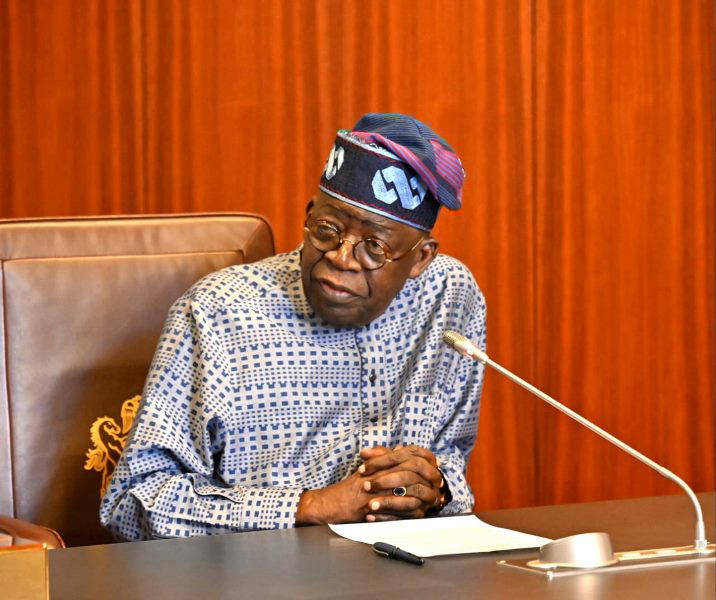
Tinubu Declares Insecurity, Poverty National Emergencies on May Day
Translated from English, summarized and contextualized by DistantNews.
TLDR
- Nigerian President Bola Tinubu declared insecurity and poverty as national emergencies, citing grave threats to jobs and stability.
- Speaking at the May Day celebration, Tinubu stated his administration is urgently addressing these challenges through policy actions.
- The president highlighted initiatives like the Community Protection Guards and expanded cash transfers, alongside infrastructure projects creating jobs and pension reforms.
Nigeria's President Bola Tinubu has officially recognized the twin crises of insecurity and poverty as national emergencies, a move that underscores the gravity of the challenges facing the nation. Speaking at the Eagle Square during the May Day celebrations, the President, represented by the Secretary to the Government of the Federation, Senator George Akume, assured workers that his administration is tackling these issues with the urgency they demand.
There cannot be decent work where workers fear for their lives, where wages cannot feed a family, or where insecurity disrupts farms, factories, markets and other economic activities.
The President's address emphasized that decent work cannot exist amidst pervasive fear, inadequate wages, and the disruption of economic activities by insecurity. He aligned Nigeria's May Day theme with the global Decent Work Agenda, acknowledging that these 'hydra-headed challenges' are significant obstacles to achieving peace and security for all citizens.
To combat insecurity, the administration has launched the Community Protection Guards Initiative, aiming to recruit 45,000 young Nigerians for community security while simultaneously creating employment opportunities. On the economic front, President Tinubu pointed to interventions under his 'Renewed Hope Agenda,' including expanded cash transfers to vulnerable households, which he claims have lifted millions out of poverty. Furthermore, significant infrastructure projects like the Lagos-Calabar Coastal Highway and the Ajaokuta-Kaduna-Kano Gas Pipeline are reported to have generated substantial employment.
These hydra-headed challenges, the government notes, have been treated as a national emergency due to their impact on productivity, livelihoods, and the confidence of both workers and employers.
In a bid to bolster worker welfare, the government has implemented a new national minimum wage, cleared pension arrears, and reinstated gratuity payments. The enrollment of over 800,000 informal sector workers into the micro-pension scheme and continued support for small businesses through an MSME fund were also highlighted. From a Nigerian perspective, these declarations signal a commitment to addressing the fundamental issues that hinder national progress and worker well-being, though the true impact of these measures will be seen in their effective implementation and the tangible improvements in the lives of ordinary citizens.
To you, our dear workers, I say this clearly; your welfare remains a priority. We are committed to improving working conditions, promoting fair wages, and ensuring that every Nigerian worker enjoys dignity, safety and equal opportunity in the workplace; hence, the recent reactivation of the payment of gratuity to Nigerian workers with e
DistantNews Editorial
Originally published by Vanguard in English. Translated, summarized, and contextualized by our editorial team with added local perspective. Read our editorial standards.
More Stories



From Our Blog

How the Same Story Looks Different in Different Countries

What Gets Lost (and Found) When News Is Translated

The Critical Role of Diaspora Media in Global News

What Travellers Should Know About Countries with Restricted Press

A Digital Nomad's Guide to Following Local News
