


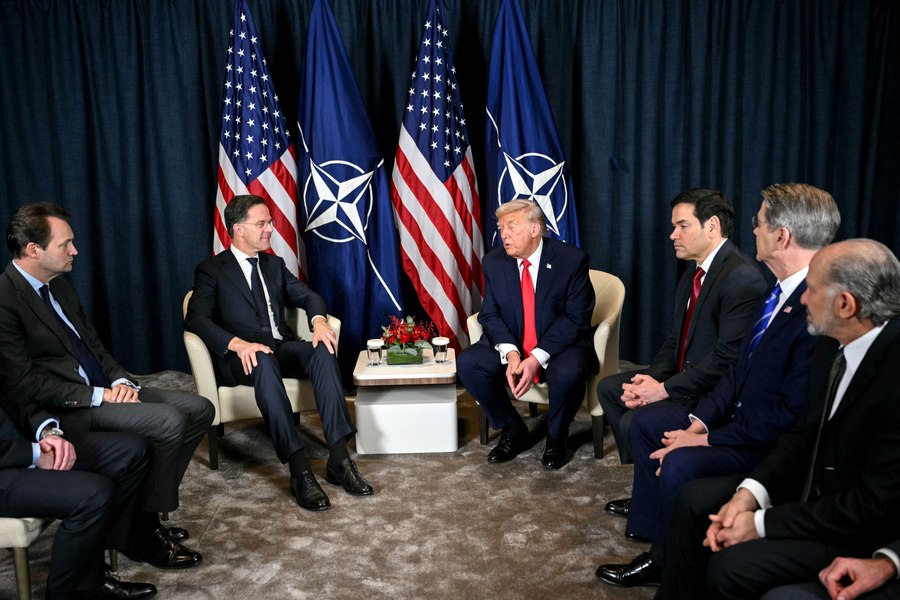
Trump Cannot Exclude NATO Countries Over Stance on Iran, Alliance Official Says on Spain Issue
Translated from Romanian, summarized and contextualized by DistantNews.
TLDR
- A NATO official stated that US President Donald Trump cannot suspend Spain's membership due to its stance on Iran.
- The official clarified that NATO's founding treaty lacks provisions for suspending or expelling member states.
- This comes amid reports of the Pentagon considering sanctions against NATO members who did not support US actions against Iran.
A senior NATO official has firmly stated that President Donald Trump lacks the authority to remove Spain from the alliance, directly countering recent reports suggesting the Pentagon was exploring punitive measures against member states hesitant to support US actions against Iran. This clarification from within the alliance underscores the foundational principles of NATO, emphasizing that its founding treaty makes no provision for the suspension or expulsion of any member state.
The founding treaty of NATO does not provide for any provision for the suspension or expulsion of a member state.
The comments emerge in the wake of intelligence suggesting the US administration was contemplating sanctions against allies perceived as unsupportive, potentially including sidelining 'difficult' countries from key NATO positions or reassessing US foreign policy stances on sensitive issues. While the article mentions the Falkland Islands and Spain's status within NATO as examples, the core issue revolves around the US's frustration with a perceived lack of solidarity from some European allies regarding Iran.
Spanish Prime Minister Pedro Sánchez reaffirmed Spain's commitment to NATO, stating, "The Spanish government's position is clear: full cooperation with our allies, but always within international law." This statement highlights Spain's adherence to established international frameworks, even as Trump has previously criticized allies for not contributing enough to defense spending or supporting US initiatives, even labeling Spain an "terrible ally" at one point.
The Spanish government's position is clear: full cooperation with our allies, but always within international law.
From the perspective of Adevărul, this situation reveals a significant tension within NATO, particularly concerning the US's unilateral approach under the Trump administration versus the collective security framework the alliance is built upon. While Western media might focus on Trump's transactional foreign policy, for Spain and many European nations, the emphasis remains on multilateralism and adherence to international law. The alliance's strength lies in its mutual defense pact, not in the ability of one leader to arbitrarily punish dissent. The NATO official's firm rebuttal serves as a crucial reminder that the alliance's structure is designed for collective action and mutual support, not punitive exclusion based on individual geopolitical disagreements.
We had one latecomer – Spain. You have to call them and find out why they are lagging behind.
DistantNews Editorial
Originally published by Adevărul in Romanian. Translated, summarized, and contextualized by our editorial team with added local perspective. Read our editorial standards.
More Stories
From Our Blog

What Gets Lost (and Found) When News Is Translated

The Critical Role of Diaspora Media in Global News

What Travellers Should Know About Countries with Restricted Press

A Digital Nomad's Guide to Following Local News

How the Same Story Looks Different in Different Countries
