

Trump's EU Car Tariff Threat: South Korea Eyes Opportunity Amidst Lingering Concerns
Translated from Korean, summarized and contextualized by DistantNews.
TLDR
- Donald Trump's administration is reportedly planning to increase tariffs on European Union-produced cars to 25%, citing non-compliance with trade agreements.
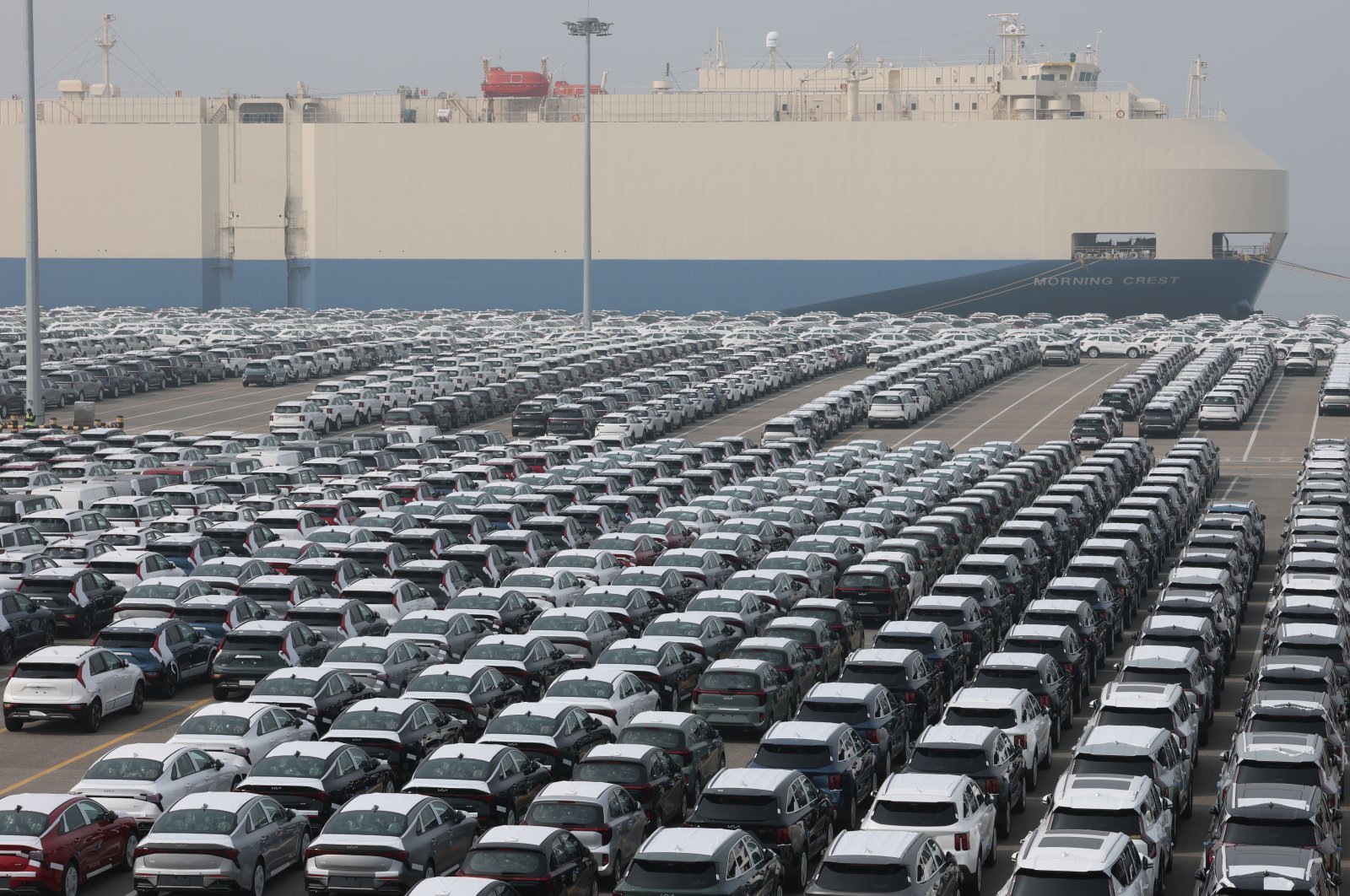
- This move could benefit South Korean automakers like Hyundai and Kia, whose luxury and higher-end models might gain a competitive edge in the U.S. market.
- However, concerns remain for South Korean companies, as Trump has previously threatened similar tariff hikes on Korean vehicles, suggesting potential future trade disputes.
The potential imposition of a 25% tariff on European Union-produced cars by the Trump administration presents a complex scenario for the global automotive industry, with South Korea finding itself in a position of cautious optimism. While the immediate impact appears to hit European luxury brands the hardest, potentially creating an opening for South Korean manufacturers like Hyundai and Kia, the specter of protectionist trade policies looms large.
European brands selling mainly luxury cars in the U.S. market could see their price competitiveness weaken, allowing South Korean automakers to secure a competitive edge.
From a South Korean perspective, the prospect of increased tariffs on EU vehicles could translate into a significant competitive advantage. Brands that have been struggling with higher import duties in the U.S. market might see their market share erode, allowing South Korean automakers, particularly those with strong offerings in the luxury and premium segments, to capture greater market share. This could be a welcome development for an industry that relies heavily on exports and is constantly seeking ways to enhance its global competitiveness.
However, this potential '반사이익' (spillover benefit) is tempered by a significant degree of uncertainty. Donald Trump's history of employing tariffs as a negotiation tactic, and his previous threats to impose similar duties on South Korean vehicles, cannot be ignored. The article rightly points out that South Korea cannot afford to be complacent, as the same protectionist sentiments that target the EU could easily be redirected towards Korean exports. This underlying risk underscores the volatile nature of international trade relations under the current U.S. administration.
Given that President Trump has previously mentioned increasing auto tariffs on South Korea and frequently uses tariffs as a bargaining chip, domestic companies cannot be entirely at ease.
Furthermore, the rationale behind the proposed EU tariffs—non-compliance with trade agreements and perceived geopolitical uncooperativeness—highlights a broader pattern of using economic tools to achieve foreign policy objectives. For South Korea, navigating these shifting trade landscapes requires a delicate balance of capitalizing on immediate opportunities while remaining vigilant against potential future disruptions. The automotive sector, a cornerstone of the South Korean economy, will be closely watching these developments, hoping for a favorable outcome while preparing for potential headwinds.
The German government estimates that the German economy could lose 15 billion euros (approximately 25.9 trillion won) due to the imposition of tariffs by President Trump, with long-term losses potentially reaching 30 billion euros (approximately 51.8 trillion won).
DistantNews Editorial
Originally published by Dong-A Ilbo in Korean. Translated, summarized, and contextualized by our editorial team with added local perspective. Read our editorial standards.
More Stories

From Our Blog

What Gets Lost (and Found) When News Is Translated

The Critical Role of Diaspora Media in Global News

What Travellers Should Know About Countries with Restricted Press

A Digital Nomad's Guide to Following Local News

How the Same Story Looks Different in Different Countries
