


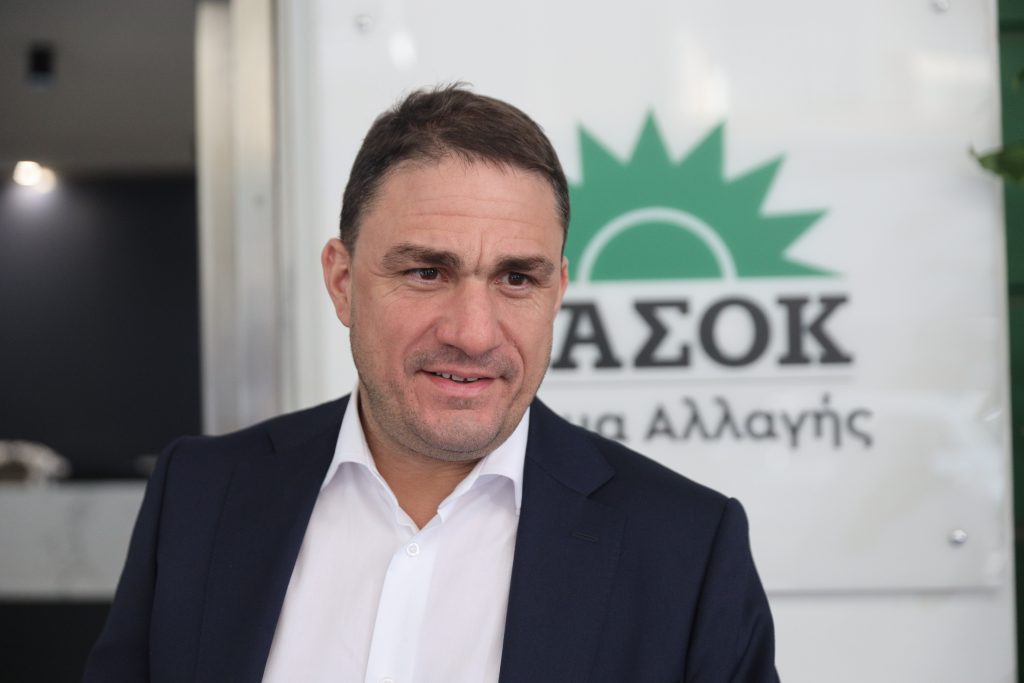
Tsoukalas to Kerameus: Populism is terrorizing society with propaganda and calling regression progress
Translated from Greek, summarized and contextualized by DistantNews.
TLDR
- PASOK spokesperson Kostas Tsoukalas criticizes the Minister of Labor, Niki Kerameus, for her statements on the four-day work week.
- Tsoukalas accuses the government of populism, propaganda, and promoting regression while calling it progress.
- He questions how young professionals can be enticed back to Greece if work is unattractive and wages are low, contrasting this with European standards.
From the offices of Ta Nea, we observe the ongoing political discourse surrounding labor policies in Greece. The recent exchange between PASOK spokesperson Kostas Tsoukalas and Minister of Labor Niki Kerameus highlights a fundamental disagreement on the nation's economic direction and its alignment with European standards.
Populism is to terrorize society with propaganda and to baptize regression as progress.
Tsoukalas's sharp critique of Kerameus's stance on the four-day work week, labeling it as "populism" and "regression," underscores PASOK's push for modernizing labor practices. He argues that the government's rhetoric, which dismisses the four-day week as unrealistic while simultaneously claiming to have implemented similar measures, lacks credibility. This, for PASOK, is indicative of a broader governmental tendency to resist innovation and cling to outdated economic models.
Populism is to say different things every day, to terrorize society with propaganda and to baptize deep regression as progress.
The core of the debate, as presented by Tsoukalas, revolves around attracting skilled professionals back to Greece. He poses critical questions about how the government expects young talent to return when the work environment is perceived as unattractive, wages are low, and the government promotes longer working hours. This perspective emphasizes the need for structural reforms and a more appealing economic model to reverse the brain drain, a sentiment deeply felt across Greece.
Populism is to be hostile to anything modern and innovative.
This discussion is particularly relevant in Greece, where the legacy of economic hardship and the persistent challenge of retaining young talent are central concerns. While international coverage might focus on the abstract economic policies, for us in Greece, it's about the tangible future of our youth and the nation's competitiveness. The government's approach, as criticized by PASOK, is seen by many as a failure to adapt to the evolving European labor landscape, a point that resonates strongly with citizens seeking progress and better opportunities.
Populism is the attempt to distort the proposal of your opponents because you cannot refute it with arguments.
DistantNews Editorial
Originally published by Ta Nea in Greek. Translated, summarized, and contextualized by our editorial team with added local perspective. Read our editorial standards.
More Stories



From Our Blog

What Gets Lost (and Found) When News Is Translated

The Critical Role of Diaspora Media in Global News

What Travellers Should Know About Countries with Restricted Press

A Digital Nomad's Guide to Following Local News

How the Same Story Looks Different in Different Countries
