


US does its robotics industry no favours by fencing it off from China
Summarized and contextualized by DistantNews.
At a glance
News
Named sources
New plan
- The US Federal Communications Commission (FCC) has added new foreign-made robots and power inverters to its Covered List, restricting their sale in the United States.
- The stated reasons for these restrictions are cybersecurity and supply-chain risks, though the article suggests protectionism for an infant industry is an unstated motive.
- The decision exempts the federal government, leading the article to question the seriousness of the threat assessment and liken the measure to a tariff.
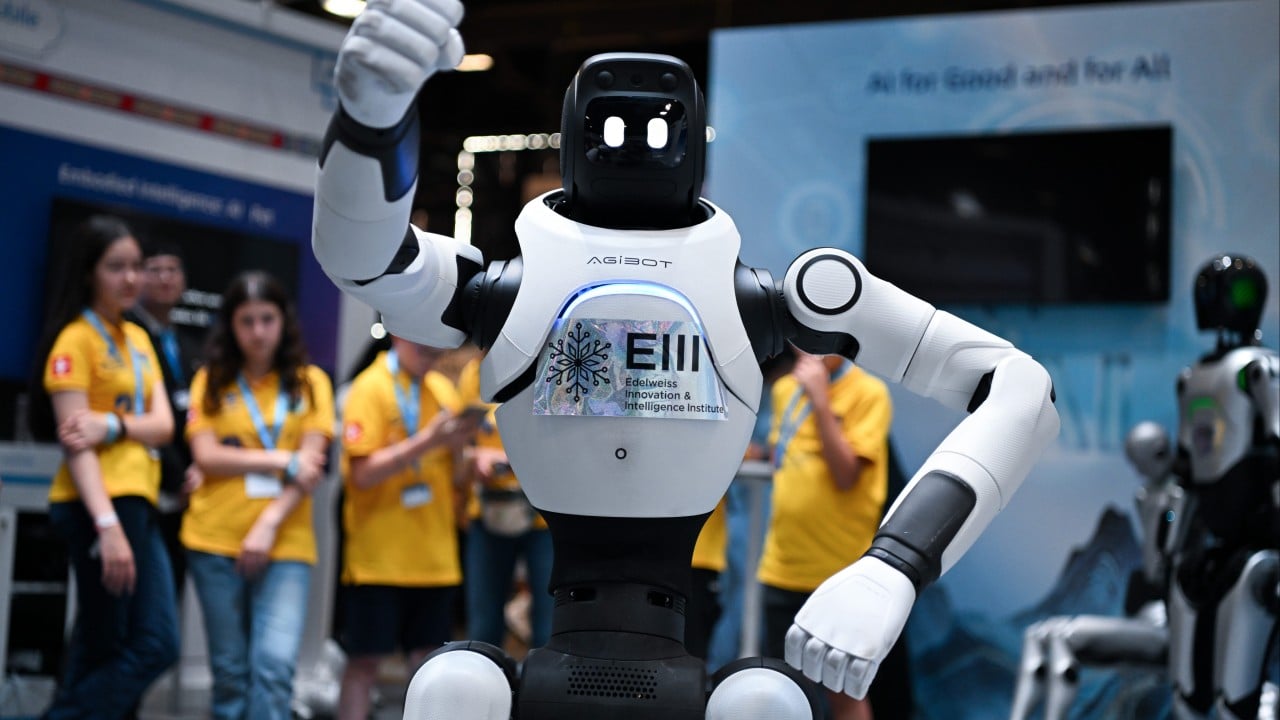
The U.S. robotics industry has received a significant, albeit controversial, intervention from the Federal Communications Commission (FCC). FCC Chairman Brendan Carr announced the addition of certain foreign-made humanoid robots, quadrupeds, and power inverters to the agency's Covered List, effectively denying them authorization for sale in the United States.
The official justification for these restrictions centers on cybersecurity and supply-chain risks. However, the article suggests that a less acknowledged motive is the protection of a nascent American robotics industry, which currently lacks established players. Chinese manufacturers reportedly dominate the global humanoid robot market, accounting for approximately 85 percent of its production. This move is perceived by the industry as an effort to nurture a domestic sector that is still in its infancy.
Evan Beard, CEO of Standard Bots, lauded the FCC's order as one of the most robust technology-security actions in modern American history. He vowed that foreign-subsidized machines would not replicate the dominance Chinese companies achieved in the solar industry. While the security concerns surrounding networked machines with advanced capabilities, potentially used for espionage or sabotage, warrant serious consideration, the order's exemptions raise questions. The federal government itself is excluded from these restrictions, allowing it to continue purchasing the very machines deemed too hazardous for ordinary citizens. This selective application leads the article to characterize the measure less as a threat assessment and more as a disguised tariff.
The article draws a parallel to the U.S. experience with the solar industry. Despite Washington's implementation of anti-dumping duties on Chinese solar panels under the Obama administration in 2012, China has since come to control over 80 percent of the global solar panel manufacturing process. This historical precedent suggests that erecting trade barriers might not necessarily foster domestic industry dominance, but rather shift market control without necessarily benefiting the protected sector in the long run.
foreign-subsidised machines would not “dominate US robotics as they did solar”
DistantNews Editorial
Originally published by South China Morning Post. Summarized and contextualized by our editorial team with added local perspective. Read our editorial standards.
More Stories
From Our Blog

Countries Without a Free Press: What You Need to Know

What Press Freedom Means for the News You Read

What Gets Lost (and Found) When News Is Translated

The Critical Role of Diaspora Media in Global News

What Travellers Should Know About Countries with Restricted Press
