

Vietnam Rejects US Containment Strategy, Aligns with China
Translated from English, summarized and contextualized by DistantNews.
TLDR
- Vietnam's military plans reject participation in US-led China containment strategy, viewing US promotion of democracy as a ploy for hegemony.
- A secret Vietnamese military document,
Even before Donald Trump's potential return to the White House, Vietnam's military strategists were already preparing for the possibility of a second invasion by the United States and its allies. The "Second US Invasion Plan," secretly issued in August 2024, clearly rejects any role for Vietnam in America's China containment strategy in the Asia-Pacific. Instead, Hanoi views the US's promotion of "freedom and democracy" as a cynical tactic to maintain its regional hegemony. The document, released in February by the human rights group Project88, emphasizes the need for vigilance against potential US aggression, stating, "due to the US’s belligerent nature, we need to be vigilant to prevent the US and its allies from ‘creating a pretext’ to launch a war of aggression against our country." The plan highlights concerns that the US and its allies could exploit Vietnam's geography, particularly its vast seas and long coastlines, leveraging their naval superiority for military operations against Vietnam.
due to the US’s belligerent nature, we need to be vigilant to prevent the US and its allies from ‘creating a pretext’ to launch a war of aggression against our country.
Trump's foreign policy, characterized by its "imperialistic" nature, has likely only amplified Hanoi's alarm. This apprehension is not unique to Vietnam; even Canada, sharing the world's longest undefended border with the US, has, for the first time in a century, prepared a military plan to counter a potential invasion from its southern neighbor. This underscores a growing regional unease about American intentions.
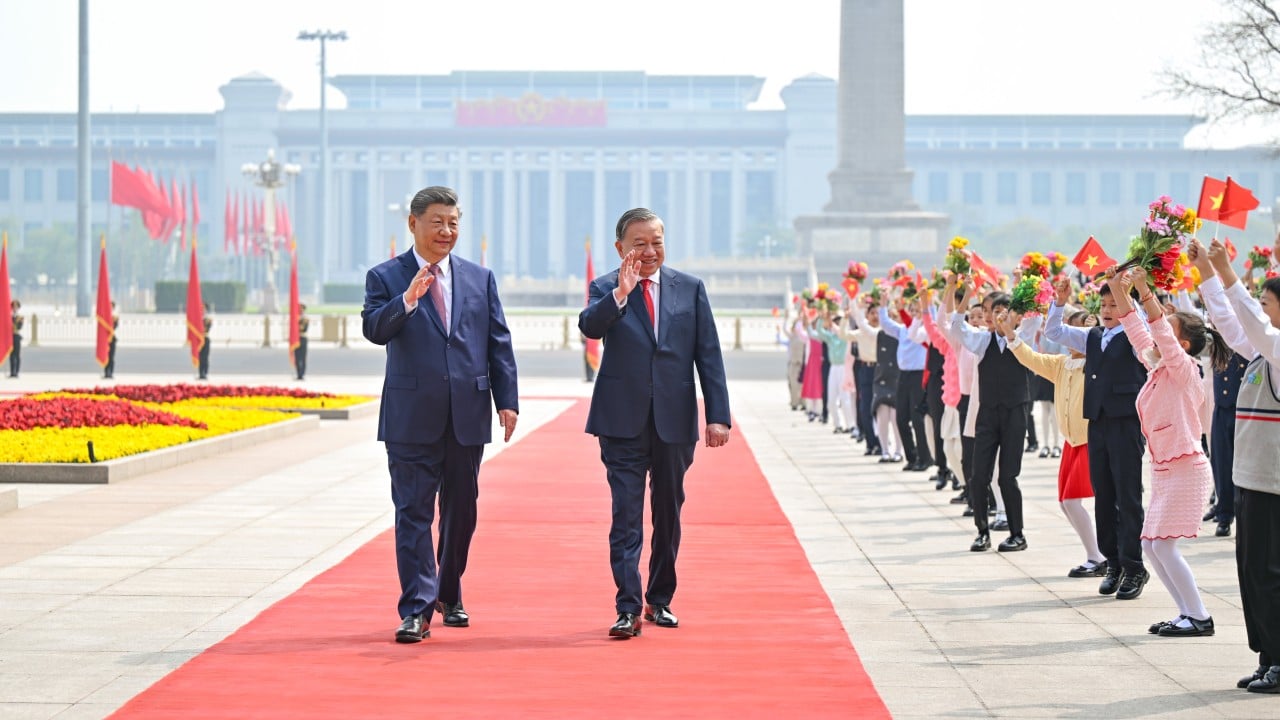
While Vietnam has outwardly elevated its diplomatic ties with Washington to the highest level, its strategic orientation is decisively tilting towards Beijing. A significant diplomatic maneuver was Vietnamese President To Lam's visit to Chinese counterpart Xi Jinping in Beijing, which Hanoi described as creating "new momentum" in bilateral relations. For the Vietnamese leadership, this alignment with China is a logical and pragmatic choice, especially considering recent joint military activities. Last month, the Chinese and Vietnamese militaries conducted a joint naval patrol and training exercise in the Gulf of Tonkin, which also included medical and cultural exchanges, signaling deepening cooperation.
The US and its allies could fully exploit the geographic and natural features of Vietnam’s vast seas and long coastlines, with the superior strength of its navy, to conduct military operations against our country.
From Vietnam's perspective, this strategic alignment is a "no-brainer." The article highlights how electric vehicle sales have surged in Vietnam, with buyers attempting to circumvent fuel price spikes exacerbated by the Middle East war and US foreign policy. This economic aspect further illustrates how global events and US actions influence domestic choices and strategic partnerships. The narrative presented here is not one of subservience but of calculated self-interest, prioritizing national security and regional stability as perceived by Hanoi, in contrast to what is often portrayed in Western media as a simple geopolitical chess game.
creating what Hanoi has called “new momentum”.
DistantNews Editorial
Originally published by South China Morning Post in English. Translated, summarized, and contextualized by our editorial team with added local perspective. Read our editorial standards.
More Stories

From Our Blog

Countries Without a Free Press: What You Need to Know

What Press Freedom Means for the News You Read

What Gets Lost (and Found) When News Is Translated

The Critical Role of Diaspora Media in Global News

What Travellers Should Know About Countries with Restricted Press
