


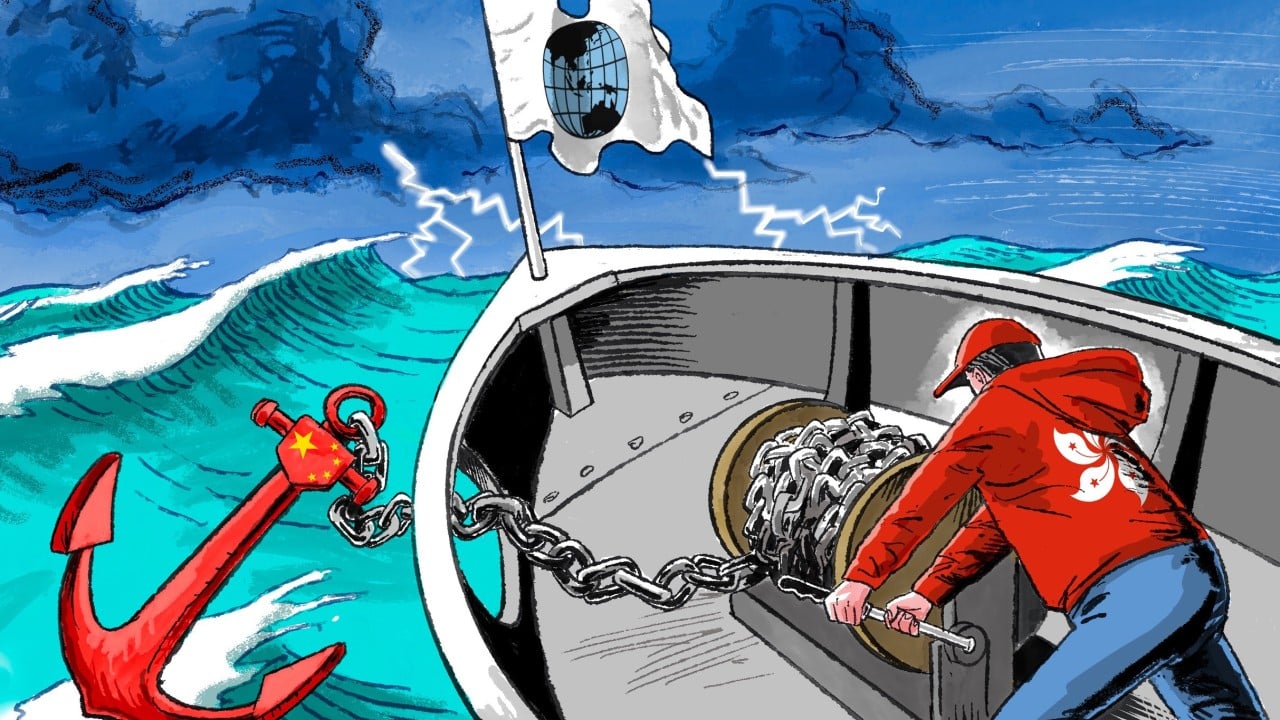
A world adrift looks to China for institutional anchors. Enter Hong Kong
Summarized and contextualized by DistantNews.
TLDR
- The international order faces strain from unilateralism and protectionism, with concerns that the US may prioritize domestic interests over global responsibility.
- The US has reduced its commitment to international organizations and treaties, signaling a potential further withdrawal from global governance.
- China's stability, institutional capacity, and support for international cooperation position it as a potential anchor for global order, offering an alternative to US leadership.
The global stage is witnessing a significant shift, with the international order buckling under the weight of unilateralism and protectionism. The United States, once a staunch advocate for a rules-based system, appears to be increasingly prioritizing narrow domestic calculations over its international responsibilities. This trend, exacerbated by a transactional approach to alliances and a growing skepticism of global governance, has left many nations questioning where institutional stability can be found.
the international order is under mounting strain. In recent years, unilateralism, protectionism and the selective application of international law have eroded confidence in the rules-based frameworks that once underpinned global cooperation.
In this climate of geopolitical turbulence, China emerges as a crucial anchor. As Columbia University professor Jeffrey Sachs notes, diversifying the geography of global governance is essential. His suggestion to establish major UN operations in Beijing or Shanghai reflects a growing recognition of China's capacity to provide stability and support for the international community. Beijing's consistent projection of continuity and its steady expansion of engagement with global institutions stand in stark contrast to the disruptive tendencies of other major powers.
Washington has repeatedly undermined the global order and, at times, international law, deepening the instability of an already fragile global order.
While Western media often focuses on the perceived threat of China's rise, from a Hong Kong perspective, this development is viewed with a different lens. The city, as a global financial hub, has a vested interest in a stable and predictable international order. The perceived retreat of the US from multilateral commitments creates a vacuum that China, with its growing influence and commitment to global governance, is increasingly filling. This shift is not merely about power dynamics; it's about the future architecture of global cooperation and the institutions that will shape it. For us at the South China Morning Post, understanding this transition and China's evolving role is paramount to navigating the complexities of the 21st century.
In other words, the world should expect the US to withdraw further. Washington is eager to reduce its commitment to multilateral institutions, increasingly sceptical of global governance and is taking a more transactional approach to alliance management.
DistantNews Editorial
Originally published by South China Morning Post. Summarized and contextualized by our editorial team with added local perspective. Read our editorial standards.
More Stories

From Our Blog

Countries Without a Free Press: What You Need to Know

What Press Freedom Means for the News You Read

What Gets Lost (and Found) When News Is Translated

The Critical Role of Diaspora Media in Global News

What Travellers Should Know About Countries with Restricted Press
