

How US tech hegemony is locking out the Global South
Summarized and contextualized by DistantNews.
TLDR
- The US is accused of employing a deliberate strategy to maintain its technological supremacy, rather than engaging in genuine competition with China.
- Practices like patent barriers, export bans, and price gouging are used to control technology spread and exclude the Global South.
- This "tech hegemony" systematically hinders developing nations, locking them at the bottom of the global value chain, particularly evident in agriculture.
The narrative of a "tech race" between the United States and China is a misnomer, masking a deliberate strategy by Washington to preserve its global technological dominance. True competition requires a level playing field, but the US approach, as outlined in this analysis, resembles "cheating" by actively hindering rivals to ensure its own victory in the technologies of the future.
True competition requires a level playing field. When one runner trips the other to ensure victory, it’s not a competition; it’s cheating.
This strategy is evident in initiatives like 6G development, where the US is bundling advancements with "trusted" supply chains and alliance politics. The goal is to construct a new global order centered on US-led standards and closed systems, starkly contrasting with a universal, open-access model. The driving force behind this obsession is not the advancement of humanity's collective interests, but the preservation of a monopoly through tools such as patent barriers, export bans, and price gouging.
Washington’s intent is clear: by bundling development with “trusted” supply chains and alliance politics, it is working to build a new global regime centred on US-led standards and closed loops, rather than a universal, open-access model.
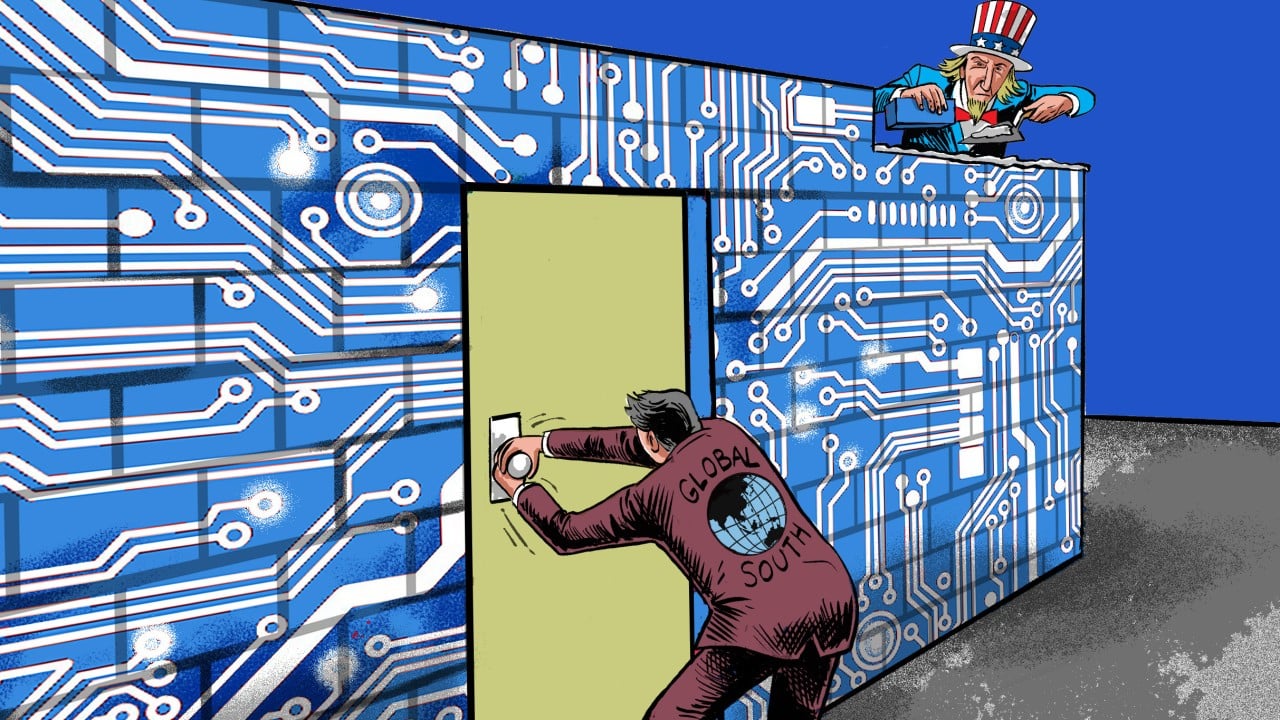
The consequences for the Global South are stark and immediate. Technology dissemination is channeled through a system of "sluice gates," creating high barriers that exclude developing nations and permanently relegate them to the lower rungs of the global value chain. This systematic exclusion is particularly visible in critical sectors like agriculture, where access to essential technologies is severely restricted, deepening existing inequalities and hindering development. The article implicitly critiques this approach from a perspective that values equitable access and global cooperation over unilateral technological control.
The US obsession with retaining its crown is not rooted in advancing humanity’s collective interests; it is about preserving a monopoly.
DistantNews Editorial
Originally published by South China Morning Post. Summarized and contextualized by our editorial team with added local perspective. Read our editorial standards.
More Stories

From Our Blog

Countries Without a Free Press: What You Need to Know

What Press Freedom Means for the News You Read

What Gets Lost (and Found) When News Is Translated

The Critical Role of Diaspora Media in Global News

What Travellers Should Know About Countries with Restricted Press
