


Woo Won-sik Announces Halt to Constitutional Amendment Process, Expresses Strong Regret Towards People Power Party
Translated from Korean, summarized and contextualized by DistantNews.
TLDR
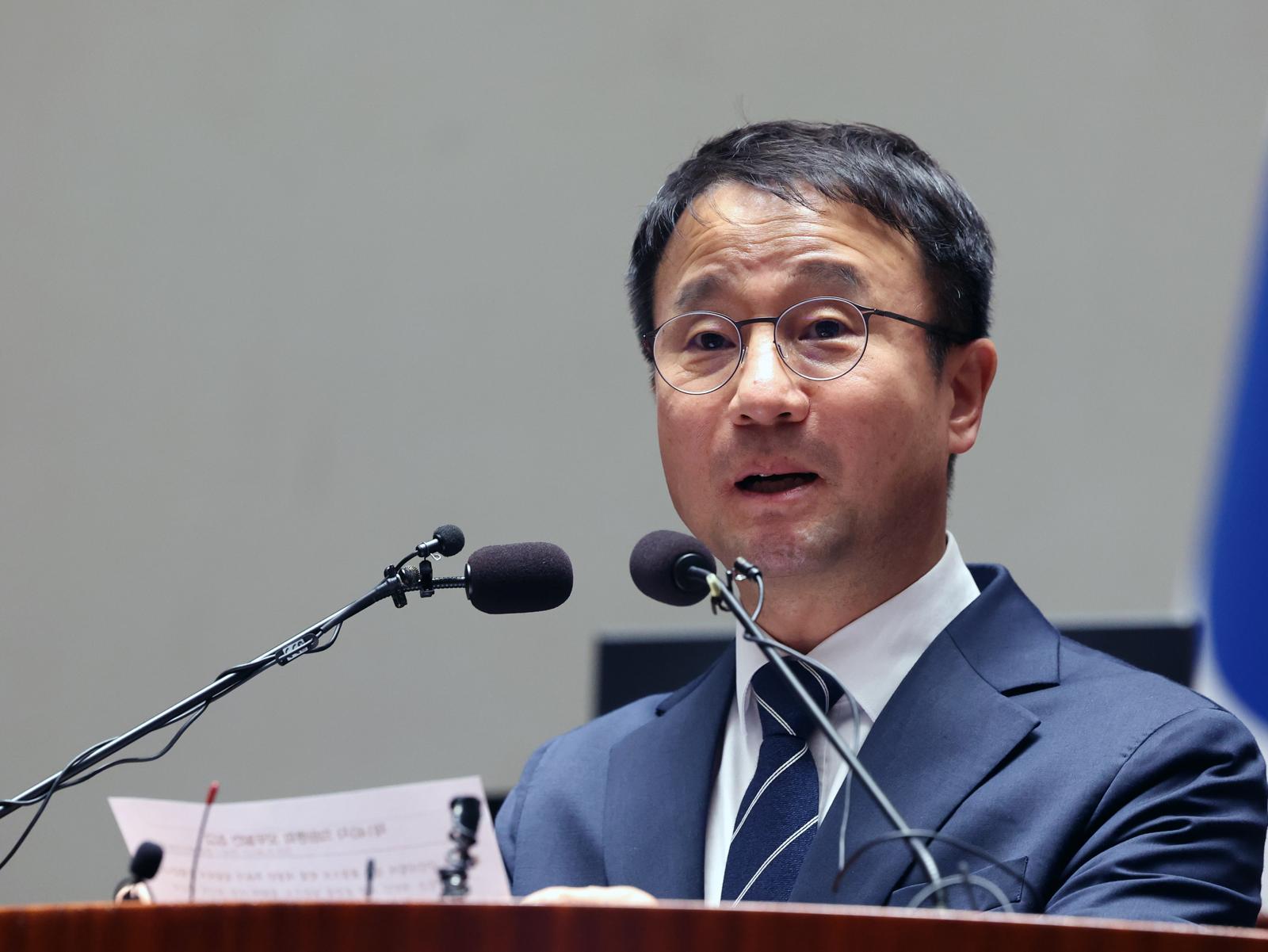
- The Democratic Party's floor leader, Woo Won-sik, announced a halt to the constitutional amendment process, expressing strong regret towards the People Power Party.
- The People Power Party has initiated a filibuster, delaying all legislative bills, including the constitutional amendment, until June 4th.
- The article also briefly mentions other political news, including allegations concerning Kim Keon-hee's luxury bag, a Busan superintendent candidate's past remarks, and various poll results for mayoral and parliamentary races.
The Democratic Party has declared a suspension of the constitutional amendment process, with floor leader Woo Won-sik voicing significant disappointment with the opposing People Power Party. This move comes as the People Power Party has resorted to a filibuster, effectively halting all legislative proceedings, including crucial constitutional reforms, until at least June 4th.
This political deadlock underscores the deep divisions and lack of cooperation currently plaguing the National Assembly. The Democratic Party's stance suggests a strategic pause, possibly aimed at reapplying pressure on the People Power Party or reassessing the viability of constitutional reform under the current political climate. The filibuster by the People Power Party, while a procedural tool, is seen by many as an obstructionist tactic that prevents progress on important national issues.
Beyond the constitutional amendment debate, the article touches upon several other contentious political matters. These include ongoing scrutiny of First Lady Kim Keon-hee regarding alleged luxury bag dealings, questions surrounding a Busan superintendent candidate's past controversial statements, and various opinion poll results for upcoming mayoral and parliamentary elections. These issues collectively paint a picture of a highly charged and fragmented political landscape in South Korea, where consensus is difficult to achieve.
DistantNews Editorial
Originally published by Hankyoreh in Korean. Translated, summarized, and contextualized by our editorial team with added local perspective. Read our editorial standards.
More Stories


From Our Blog

What Gets Lost (and Found) When News Is Translated

The Critical Role of Diaspora Media in Global News

What Travellers Should Know About Countries with Restricted Press

A Digital Nomad's Guide to Following Local News

How the Same Story Looks Different in Different Countries
